Texas Window Tint Law 2026
Texas requires at least 25% on the front side windows. We have not established a published figure for the back side windows and rear window, and this page marks that as a gap rather than implying no limit applies.
As an Amazon Associate, StreetLawful earns from qualifying purchases. Product listings are matched to statutory requirements as we read them — this is not a guarantee of compliance, and we do not test or measure any film ourselves.
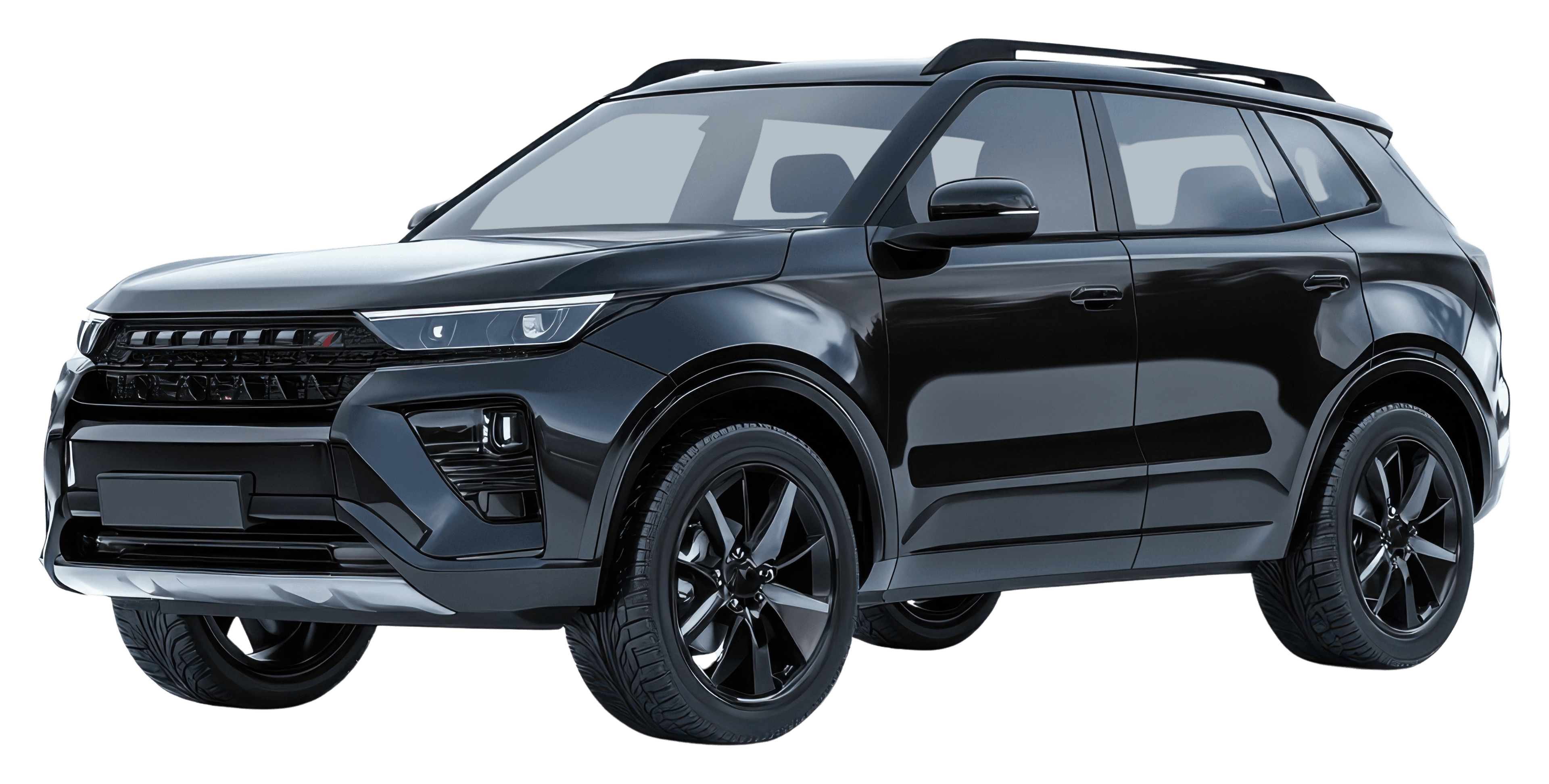
Choose a tint level
Our pick at 35% VLT
- 35%VLTIAQWEIAQWE 35% VLT Ceramic Car Window Tint Film 20 in x 20 ft Roll | High Heat Rejection, UV Block, Privacy, Shatterproof, Scratch Resistant & No Signal InterferenceCeramic (nano-ceramic, 5-layer)20″ × 20′ rollRated 35% VLT — may comply with the 25% requirement for front side windows; verify the installed reading.View on Amazon
Our pick at 50% VLT
- 50%VLTIAQWEIAQWE 50% VLT Ceramic Car Window Tint Film 20 in x 20 ft Roll | High Heat Rejection, UV Block, Privacy, Shatterproof, Scratch Resistant & No Signal InterferenceCeramic (nano-ceramic, 5-layer)20″ × 20′ rollRated 50% VLT — may comply with the 25% requirement for front side windows; verify the installed reading.View on Amazon
Our pick at 70% VLT
- 70%VLTARANAARANA 70% VLT 36"x15FT Ceramic Car Window Tint Film | Keep Car Cool, UV Heat Blocking, Daytime Privacy & Anti-Glare, Scratch Resistant, Phone/GPS Friendly, DIY InstallCeramic (nano-ceramic)36″ × 15′ rollRated 70% VLT — may comply with the 25% requirement for front side windows; verify the installed reading.View on Amazon
More options that clear this figure, darkest first
- 35%VLTIAQWEIAQWE 35% VLT Ceramic Car Window Tint Film 20 in x 20 ft Roll | High Heat Rejection, UV Block, Privacy, Shatterproof, Scratch Resistant & No Signal InterferenceCeramic (nano-ceramic, 5-layer)20″ × 20′ rollRated 35% VLT — may comply with the 25% requirement for front side windows; verify the installed reading.View on Amazon
- 35%VLTRockRoseRockRose 35% Nano Ceramic Car Window Tint 36 in x 25FT 2PLY Privacy Film Heat Block, 99% UVR, and 85% IRR Block for Auto or Home Strong Adhesive, Easy Shrink, Plotter Friendly - CharcoalCeramic (2-ply nano-ceramic)36″ × 25′ rollRated 35% VLT — may comply with the 25% requirement for front side windows; verify the installed reading.View on Amazon
- 50%VLTIAQWEIAQWE 50% VLT Ceramic Car Window Tint Film 20 in x 20 ft Roll | High Heat Rejection, UV Block, Privacy, Shatterproof, Scratch Resistant & No Signal InterferenceCeramic (nano-ceramic, 5-layer)20″ × 20′ rollRated 50% VLT — may comply with the 25% requirement for front side windows; verify the installed reading.View on Amazon
- 70%VLTARANAARANA 70% VLT 36"x15FT Ceramic Car Window Tint Film | Keep Car Cool, UV Heat Blocking, Daytime Privacy & Anti-Glare, Scratch Resistant, Phone/GPS Friendly, DIY InstallCeramic (nano-ceramic)36″ × 15′ rollRated 70% VLT — may comply with the 25% requirement for front side windows; verify the installed reading.View on Amazon
Showing 4 of the 12 films we list that clear this figure. Verify before you tint. We match a film’s own rating against the figure in the statute above. We do not measure film, and a manufacturer rating is not a compliance certificate.
The limits at a glance
Texas sets the same limits for passenger cars and for SUVs, vans and trucks, so there is nothing to switch between.
Film that may meet the 25% requirement for front side windows
- 25% VLT minimum — measured on the installed glass, film and window togetherTex. Transp. Code §547.613(b)(2) — Texas Transportation Code (Texas Legislative Council) · read
- This limit is measured on the installed glass, not on the film. Factory glass blocks light on its own, so film rated at or above the figure can still read below it once applied. Treat these as candidates and verify the installed reading.Tex. Transp. Code §547.613(b)(2) — Texas Transportation Code (Texas Legislative Council) · read
- This state also restricts film colour: A sunscreening device on the windshield may not be red, blue or amber. No colour restriction is stated for the side or rear windows, though subsection (a)(2) independently reaches transparent material that "alters the color" of any window except as subsection (b) allows.Tex. Transp. Code §547.613(b)(1)(C) — Texas Transportation Code (Texas Legislative Council) · read
- This state also caps reflectance for this glass at 25%. Mirrored and metallic films can exceed it regardless of their VLT rating.Tex. Transp. Code §547.613(b)(2)(B) — Texas Transportation Code (Texas Legislative Council) · read
Every Texas tint rule we track
| Rule | Applies to | What the law says | Source |
|---|---|---|---|
| Windshield strip — how dark the strip may be | All vehicles | 25% VLT minimum measured on the installed glass + film together DetailTexas is unusual in attaching a real percentage to the windshield band rather than leaving it unmeasured — Colorado permits fully nontransparent material there, and Wyoming, South Carolina and Oklahoma set no figure at all. All four conditions in (b)(1) are cumulative: 25% transmission in combination with the windshield, 25% or less luminous reflectance, not red, blue or amber, and within the AS-1/five-inch band. NET_ASSEMBLY basis, stated in the operative text: the exceptions in (b)(1) and (b)(2) measure the sunscreening device "in combination with the windshield" and "in combination with the vent or window". Texas never rates the film alone, so a 25%-rated film over factory-tinted glass falls outside the exception. Structural note: this is an EXCEPTION, not a limit. (a) makes it a misdemeanour to place on or attach to the windshield or side or rear window "a transparent material that alters the color or reduces the light transmission", and (b) then lists what (a) does not reach. A configuration matching no (b) exception is an offence rather than an unregulated case. | Tex. Transp. Code §547.613(b)(1)(A) — Texas Transportation Code (Texas Legislative Council) · read “in combination with the windshield has a light transmission of 25 percent or more;” |
| Windshield strip — how far down it may extend | All vehicles | AS-1 line or 5 inches from the top — whichever is CLOSER TO THE TOPDetailTexas takes the more restrictive of the two measures, as Oklahoma and Wyoming do — the inch figure competes with the AS-1 line rather than serving as a fallback when the marking is absent. Contrast the District of Columbia, which recites the same pair with a plain "or". | Tex. Transp. Code §547.613(b)(1)(D) — Texas Transportation Code (Texas Legislative Council) · read “does not extend downward beyond the AS-1 line or more than five inches from the top of the windshield, whichever is closer to the top of the windshield;” |
| Windshield below the strip | All vehicles | No sunscreening device permitted below the band. The (b)(1) exception is available only to a device confined to the AS-1/five-inch band, so film lower on the windshield falls back under the (a) offence regardless of how light it is.DetailTwo other (b) exceptions can reach the windshield and should not be mistaken for a tint allowance: (b)(11) preserves "a window that has a United States, state, or local certificate placed on or attached to it as required by law", and (b)(13) exempts glazing that complies with federal standards, "including a factory-tinted or a pretinted window installed by the vehicle manufacturer, or a replacement window meeting the specifications required by the vehicle manufacturer". | Tex. Transp. Code §547.613(a)(2) — Texas Transportation Code (Texas Legislative Council) · read “if a person, including an installer or manufacturer, places on or attaches to the windshield or side or rear window of a motor vehicle a transparent material that alters the color or reduces the light transmission.” |
| Front side windows | All vehicles | 25% VLT minimum measured on the installed glass + film together DetailThe figure itself is in (b)(2)(A), "a light transmission of 25 percent or more", paired with the 25% reflectance ceiling in (b)(2)(B). The scope phrase is worth reading closely — "to the left or right of the vehicle operator" marks the boundary at the OPERATOR, which is what makes (b)(2-a) exempt everything behind. NET_ASSEMBLY basis, stated in the operative text: the exceptions in (b)(1) and (b)(2) measure the sunscreening device "in combination with the windshield" and "in combination with the vent or window". Texas never rates the film alone, so a 25%-rated film over factory-tinted glass falls outside the exception. Structural note: this is an EXCEPTION, not a limit. (a) makes it a misdemeanour to place on or attach to the windshield or side or rear window "a transparent material that alters the color or reduces the light transmission", and (b) then lists what (a) does not reach. A configuration matching no (b) exception is an offence rather than an unregulated case. | Tex. Transp. Code §547.613(b)(2) — Texas Transportation Code (Texas Legislative Council) · read “a wing vent or a window that is to the left or right of the vehicle operator if the vent or window has a sunscreening device that in combination with the vent or window has:” |
| Back side windows | All vehicles | confirmed No restriction whatever. The offence in subsection (a) does not apply to a side window that is to the rear of the vehicle operator — no percentage, no reflectance ceiling, no mirror condition and no vehicle-class qualification.DetailThis is an affirmatively-confirmed absence, not an unread gap: (b)(2-a) is a freestanding exception with no conditions attached, in a list where the neighbouring items all carry conditions. Texas is commonly published as a flat "25% all around" state, which misstates the back side windows entirely. (b)(10) separately exempts "a side window that is to the rear of the vehicle operator on a multipurpose vehicle" — narrower and now redundant of (2-a), which suggests (2-a) was the later, broader amendment. | Tex. Transp. Code §547.613(b)(2-a) — Texas Transportation Code (Texas Legislative Council) · read “a side window that is to the rear of the vehicle operator;” |
| Rear window | All vehicles | confirmed No transmittance limit on the rear window, provided the vehicle has an outside mirror on each side reflecting to the operator a view of the highway at least 200 feet to the rear. outside mirror on each side giving a 200-foot rearward view DetailThe mirror condition is the whole of the rule — meet it and the rear window may be arbitrarily dark; fail it and the rear window has no exception at all and any transparent material altering colour or reducing transmission is an offence under (a). Note the asymmetry with (b)(2-a): the rear SIDE windows are exempt unconditionally, while the rear window itself is exempt only on the mirror condition. | Tex. Transp. Code §547.613(b)(3) — Texas Transportation Code (Texas Legislative Council) · read “a rear window, if the motor vehicle is equipped with an outside mirror on each side of the vehicle that reflects to the vehicle operator a view of the highway for a distance of at least 200 feet from the rear;” |
| Reflectivity — front side windows | All vehicles | 25% reflectance maximumDetailMeasured "in combination with the vent or window" like the transmittance figure, so unlike Oklahoma and Wyoming — which measure transmittance on the assembly but reflectance on the film — Texas keeps both on the finished window. The identical 25% ceiling governs the windshield band under (b)(1)(B). | Tex. Transp. Code §547.613(b)(2)(B) — Texas Transportation Code (Texas Legislative Council) · read “a luminous reflectance of 25 percent or less;” |
| Reflectivity — back side windows | All vehicles | confirmed No reflectance limit behind the operator. The reflectance ceilings appear only in the windshield and front-side exceptions; (b)(2-a) and (b)(3) exempt the rear side windows and the rear window without imposing one.DetailRecorded as an affirmative absence on the strength of the drafting contrast within subsection (b): (b)(1) and (b)(2) each spell out a "luminous reflectance of 25 percent or less", and (b)(2-a) and (b)(3) spell out no condition and a mirror condition respectively. The legislature imposed the reflectance ceiling where it wanted it. | Tex. Transp. Code §547.613(b)(2-a) — Texas Transportation Code (Texas Legislative Council) · read “a side window that is to the rear of the vehicle operator;” |
| Medical exemption | All vehicles | A defense to prosecution only — not a permit, certificate or advance authorization. It is a defense that the defendant, or a passenger in the vehicle at the time of the violation, is required for a medical reason to be shielded from direct rays of the sun.DetailThis is a materially weaker instrument than it looks and the difference matters to anyone relying on it. Texas requires no application, issues no certificate, names no physician or optometrist, and sets no alternative percentage — compare Oklahoma and Wyoming, where a state official issues an exemption in advance on a physician's attestation, or South Carolina, where a physician's affidavit is carried in the vehicle. A Texas driver invoking (e) is still stopped, still cited, and raises the defense afterwards. The defense does reach a vehicle carrying an affected PASSENGER, not only the driver. | Tex. Transp. Code §547.613(e) — Texas Transportation Code (Texas Legislative Council) · read “It is a defense to prosecution under Subsection (a) that the defendant or a passenger in the vehicle at the time of the violation is required for a medical reason to be shielded from direct rays of the sun.” |
| Certification sticker / label | All vehicles | Required, as a label installed behind the film rather than a sticker on the glass surface. A sunscreening device must carry a legible label giving the department-required light transmission and luminous reflectance information, stating that the device's transmission is consistent with §547.613(b)(1) or (2), and permanently installed between the material and the surface it is applied to. An installer who applies film without it commits a misdemeanour punishable by a fine of up to $1,000.DetailThe label duty and its penalty live in two places. §547.609 states the label's content and placement; §547.613(a-1) creates the offence, providing that a person in the business of applying such material "commits a misdemeanor punishable by a fine not to exceed $1,000" if they apply it and "does not install a label that complies with Section 547.609 between the transparent material and the windshield or side or rear window of the vehicle, as applicable." Separately, §547.613(c) requires that "A manufacturer shall certify to the department that the sunscreening device made or assembled by the manufacturer complies with the light transmission and luminous reflectance specifications established by Subsection (b)" — a certification running to the state, distinct from the label running to the vehicle. | Tex. Transp. Code §547.609 — Texas Transportation Code (Texas Legislative Council) · read “REQUIRED LABEL FOR SUNSCREENING DEVICES. A sunscreening device must have a label that: (1) is legible; (2) contains information required by the department on light transmission and luminous reflectance of the device; (3) if the device is placed on or attached to a windshield or a side or rear window, states that the light transmission of the device is consistent with Section 547.613 (b)(1) or (2), as applicable; and (4) is permanently installed between the material and the surface to which the material is applied.” |
| Restricted colors | All vehicles | A sunscreening device on the windshield may not be red, blue or amber. No colour restriction is stated for the side or rear windows, though subsection (a)(2) independently reaches transparent material that "alters the color" of any window except as subsection (b) allows.DetailBLUE is the outlier. Montana, Wyoming and South Carolina all bar red, yellow and amber; Colorado and Oklahoma bar red and amber. Texas is the only jurisdiction extracted so far that names blue, and it does not name yellow. The bar sits inside the (b)(1) windshield exception, so it does not reach the side or rear glass directly. | Tex. Transp. Code §547.613(b)(1)(C) — Texas Transportation Code (Texas Legislative Council) · read “is not red, blue, or amber; and” |
| Side mirrors required if the rear window is tinted | All vehicles | Required required to bring the rear window within the (b)(3) exception; not required for the rear side windows DetailTexas states the mirror duty with a performance specification — a 200-foot rearward view — where Wyoming and South Carolina simply require one mirror on each side. Oklahoma uses the identical 200-foot formulation in its pre-1996 exception, which is a strong sign both trace to the same model provision. The duty attaches only to the rear window; the rear side windows are exempt under (b)(2-a) with no mirror requirement. | Tex. Transp. Code §547.613(b)(3) — Texas Transportation Code (Texas Legislative Council) · read “if the motor vehicle is equipped with an outside mirror on each side of the vehicle that reflects to the vehicle operator a view of the highway for a distance of at least 200 feet from the rear;” |
This state publishes no light-transmittance figure for this glass, so there is no percentage to match a film against. Other rules — colour, reflectivity, obstruction — can still apply, so we are not going to present a shelf as though nothing does.
Sources
- Tex. Transp. Code §547.613 — Texas Transportation Code (Texas Legislative Council), read
- Tex. Transp. Code §547.609 — Texas Transportation Code (Texas Legislative Council), read
Nearby states
Other Texas modification laws
Texas exhaust and muffler laws
Not published yet. We have not researched this category for Texas — which is a statement about us, not about whether Texas regulates it.
Texas lighting and underglow laws
Not published yet. We have not researched this category for Texas — which is a statement about us, not about whether Texas regulates it.
Texas lift kit and bumper height laws
Not published yet. We have not researched this category for Texas — which is a statement about us, not about whether Texas regulates it.
Texas wheel and tire laws
Not published yet. We have not researched this category for Texas — which is a statement about us, not about whether Texas regulates it.
Texas ECU tuning and emissions laws
Not published yet. We have not researched this category for Texas — which is a statement about us, not about whether Texas regulates it.
Texas intake laws
Not published yet. We have not researched this category for Texas — which is a statement about us, not about whether Texas regulates it.
Texas body and appearance laws
Not published yet. We have not researched this category for Texas — which is a statement about us, not about whether Texas regulates it.