Oklahoma Window Tint Law 2026
Oklahoma requires at least 25% on the front side windows, 25% on the back side windows and 25% on the rear window.
As an Amazon Associate, StreetLawful earns from qualifying purchases. Product listings are matched to statutory requirements as we read them — this is not a guarantee of compliance, and we do not test or measure any film ourselves.
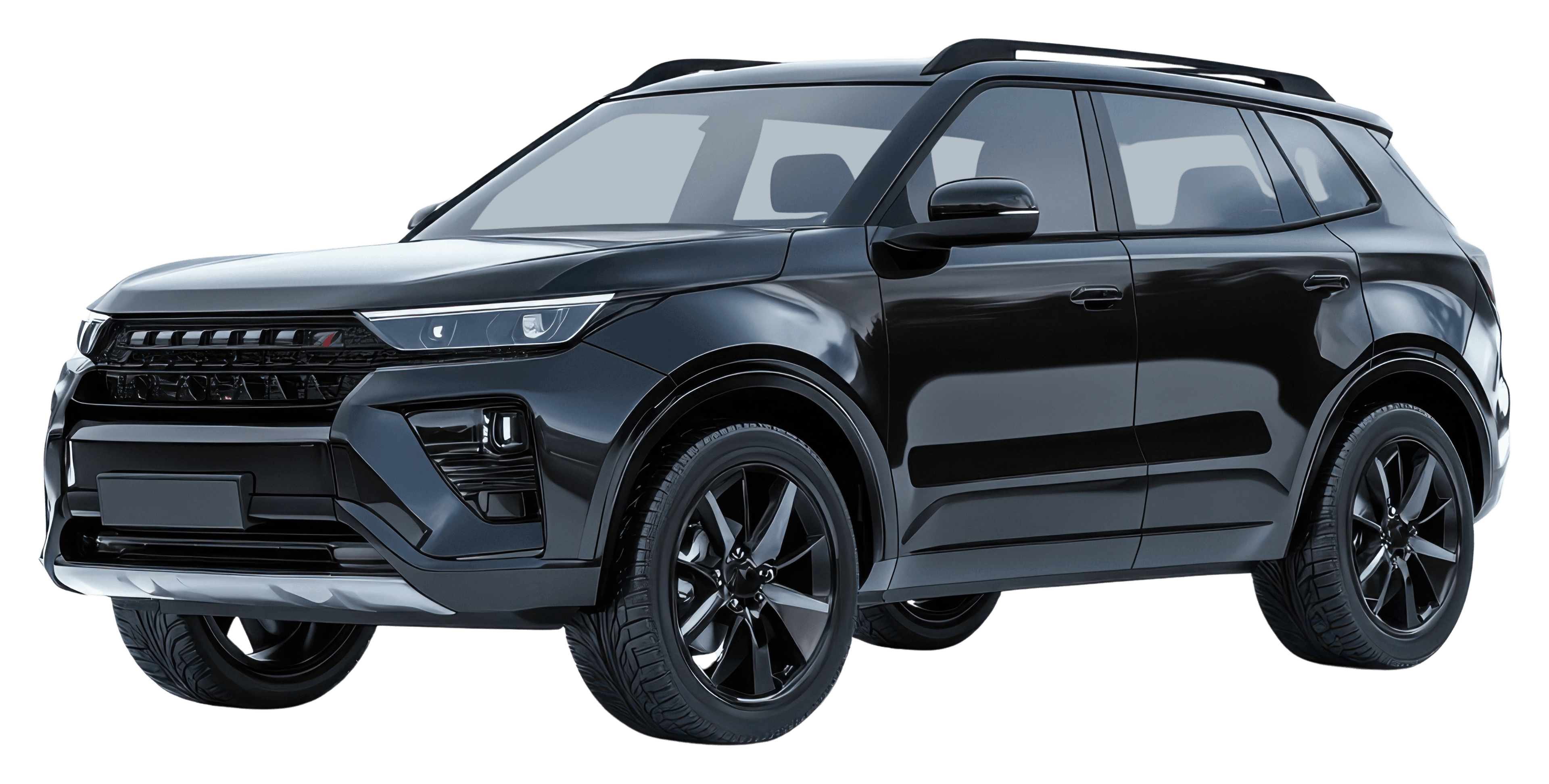
Choose a tint level
Our pick at 35% VLT
- 35%VLTIAQWEIAQWE 35% VLT Ceramic Car Window Tint Film 20 in x 20 ft Roll | High Heat Rejection, UV Block, Privacy, Shatterproof, Scratch Resistant & No Signal InterferenceCeramic (nano-ceramic, 5-layer)20″ × 20′ rollRated 35% VLT — may comply with the 25% requirement for front side windows; verify the installed reading.View on Amazon
Our pick at 50% VLT
- 50%VLTIAQWEIAQWE 50% VLT Ceramic Car Window Tint Film 20 in x 20 ft Roll | High Heat Rejection, UV Block, Privacy, Shatterproof, Scratch Resistant & No Signal InterferenceCeramic (nano-ceramic, 5-layer)20″ × 20′ rollRated 50% VLT — may comply with the 25% requirement for front side windows; verify the installed reading.View on Amazon
Our pick at 70% VLT
- 70%VLTARANAARANA 70% VLT 36"x15FT Ceramic Car Window Tint Film | Keep Car Cool, UV Heat Blocking, Daytime Privacy & Anti-Glare, Scratch Resistant, Phone/GPS Friendly, DIY InstallCeramic (nano-ceramic)36″ × 15′ rollRated 70% VLT — may comply with the 25% requirement for front side windows; verify the installed reading.View on Amazon
More options that clear this figure, darkest first
- 35%VLTIAQWEIAQWE 35% VLT Ceramic Car Window Tint Film 20 in x 20 ft Roll | High Heat Rejection, UV Block, Privacy, Shatterproof, Scratch Resistant & No Signal InterferenceCeramic (nano-ceramic, 5-layer)20″ × 20′ rollRated 35% VLT — may comply with the 25% requirement for front side windows; verify the installed reading.View on Amazon
- 35%VLTRockRoseRockRose 35% Nano Ceramic Car Window Tint 36 in x 25FT 2PLY Privacy Film Heat Block, 99% UVR, and 85% IRR Block for Auto or Home Strong Adhesive, Easy Shrink, Plotter Friendly - CharcoalCeramic (2-ply nano-ceramic)36″ × 25′ rollRated 35% VLT — may comply with the 25% requirement for front side windows; verify the installed reading.View on Amazon
- 50%VLTIAQWEIAQWE 50% VLT Ceramic Car Window Tint Film 20 in x 20 ft Roll | High Heat Rejection, UV Block, Privacy, Shatterproof, Scratch Resistant & No Signal InterferenceCeramic (nano-ceramic, 5-layer)20″ × 20′ rollRated 50% VLT — may comply with the 25% requirement for front side windows; verify the installed reading.View on Amazon
- 70%VLTARANAARANA 70% VLT 36"x15FT Ceramic Car Window Tint Film | Keep Car Cool, UV Heat Blocking, Daytime Privacy & Anti-Glare, Scratch Resistant, Phone/GPS Friendly, DIY InstallCeramic (nano-ceramic)36″ × 15′ rollRated 70% VLT — may comply with the 25% requirement for front side windows; verify the installed reading.View on Amazon
Showing 4 of the 12 films we list that clear this figure. Verify before you tint. We match a film’s own rating against the figure in the statute above. We do not measure film, and a manufacturer rating is not a compliance certificate.
The limits at a glance
Oklahoma sets the same limits for passenger cars and for SUVs, vans and trucks, so there is nothing to switch between.
Film that may meet the 25% requirement for front side windows
- 25% VLT minimum — measured on the installed glass, film and window together47 O.S. §12-422(D)(1) — Oklahoma Statutes Title 47 (Oklahoma State Senate) · read
- This limit is measured on the installed glass, not on the film. Factory glass blocks light on its own, so film rated at or above the figure can still read below it once applied. Treat these as candidates and verify the installed reading.47 O.S. §12-422(D)(1) — Oklahoma Statutes Title 47 (Oklahoma State Senate) · read
- This state also restricts film colour: Material on the permitted windshield band may not be red or amber. No colour restriction is stated for the side or rear windows, but subsection C independently prohibits any material on those windows that "alters the color" of the window except as subsection D allows.47 O.S. §12-422(D)(11)(b) — Oklahoma Statutes Title 47 (Oklahoma State Senate) · read
- This state also caps reflectance for this glass at 25%. Mirrored and metallic films can exceed it regardless of their VLT rating.47 O.S. §12-422(D)(1) — Oklahoma Statutes Title 47 (Oklahoma State Senate) · read
Every Oklahoma tint rule we track
| Rule | Applies to | What the law says | Source |
|---|---|---|---|
| Windshield strip — how dark the strip may be | All vehicles | No VLT percentage. The permitted band at the top of the windshield must be TRANSPARENT material and may not be red or amber; no transmittance figure is attached to it.DetailThe qualifier doing the work is "Transparent" — the exception is available only to transparent material, which excludes an opaque band outright, but the statute sets no percentage. The 25% figure in D.1 is scoped to "Side or back windows" and does not reach the windshield. Structural note: this is an EXCEPTION, not a limit. B makes it unlawful to sell, install or operate a vehicle with any object or material placed upon the windshield or side or rear windows, and C makes it unlawful to apply any transparent material that "alters the color or reduces the light transmittance" of those windows. D.1 then lifts the ban for material meeting the figures. A configuration that falls outside every D exception is prohibited outright rather than merely unregulated. | 47 O.S. §12-422(D)(11) — Oklahoma Statutes Title 47 (Oklahoma State Senate) · read “Transparent material which is installed, affixed, or applied to the topmost portion of the windshield if:” |
| Windshield strip — how far down it may extend | All vehicles | AS-1 line or 5 inches from the top — whichever is CLOSER TO THE TOPDetailOklahoma states both measures and then takes the MORE RESTRICTIVE of the two — "whichever is closer to the top of the windshield". This is the opposite of the common fallback drafting, where the inch figure applies only when the AS-1 line is absent (compare Nebraska's 5-inch default). On a vehicle whose AS-1 line sits more than five inches down, Oklahoma's effective limit is five inches, not the AS-1 line. | 47 O.S. §12-422(D)(11)(a) — Oklahoma Statutes Title 47 (Oklahoma State Senate) · read “it does not extend downward beyond the AS-1 line or more than five (5) inches from the top of the windshield, whichever is closer to the top of the windshield, and” |
| Windshield below the strip | All vehicles | No tint permitted below the strip. Applying any transparent material that alters the color or reduces the light transmittance of the windshield is unlawful except under a subsection D exception, and the only windshield exception is the topmost band in D.11.DetailReading C together with D: D.1 rescues "Side or back windows" at 25%, and D.11 rescues the topmost band of the windshield. Nothing rescues the body of the windshield, so there is no percentage at which windshield tint below the band becomes lawful. D.5 separately permits signs or stickers in a forty-nine-square-inch area in either lower corner of the windshield, which is a display allowance rather than a tint one. | 47 O.S. §12-422(C) — Oklahoma Statutes Title 47 (Oklahoma State Senate) · read “It is unlawful for any person to place, install, affix, or apply any transparent material upon the windshield or side or rear windows of any motor vehicle if such material alters the color or reduces the light transmittance of such windshield or side or rear windows except as provided in this section.” |
| Front side windows | All vehicles | 25% VLT minimum measured on the installed glass + film together DetailNET_ASSEMBLY basis, fixed by the statute's own definitions. A.2: "\"Light transmission\" means the percentage of total light which is allowed to pass through a window". A.5: "\"Window\" means the windshield, side or rear glass of a motor vehicle, including any glazing material, glass coating or sunscreening device." The measured object is therefore the finished window including the film, not the film alone. D.1 reinforces it by conditioning the exception on material "in conjunction with glazing material". Structural note: this is an EXCEPTION, not a limit. B makes it unlawful to sell, install or operate a vehicle with any object or material placed upon the windshield or side or rear windows, and C makes it unlawful to apply any transparent material that "alters the color or reduces the light transmittance" of those windows. D.1 then lifts the ban for material meeting the figures. A configuration that falls outside every D exception is prohibited outright rather than merely unregulated. D.2 is a separate and easily-confused exception for "Front side wing vents and windows that have a substance or material NOT attached in conjunction with glazing material which is used by a vehicle operator on a moving vehicle during daylight hours" — that is a removable sunshade allowance, not a film permission, and it carries no percentage. | 47 O.S. §12-422(D)(1) — Oklahoma Statutes Title 47 (Oklahoma State Senate) · read “Side or back windows that have a substance or material in conjunction with glazing material that has a light transmission of at least twenty-five percent (25%) and a luminous reflectance of at most twenty-five percent (25%);” |
| Back side windows | All vehicles | 25% VLT minimum measured on the installed glass + film together DetailOklahoma draws no line at the driver or the front seat for modern vehicles — "Side or back windows" is one undivided category. NET_ASSEMBLY basis, fixed by the statute's own definitions. A.2: "\"Light transmission\" means the percentage of total light which is allowed to pass through a window". A.5: "\"Window\" means the windshield, side or rear glass of a motor vehicle, including any glazing material, glass coating or sunscreening device." The measured object is therefore the finished window including the film, not the film alone. D.1 reinforces it by conditioning the exception on material "in conjunction with glazing material". The 10% figure in D.10 applies only to pre-1996 model-year vehicles with dual outside mirrors; see the paired row. | 47 O.S. §12-422(D)(1) — Oklahoma Statutes Title 47 (Oklahoma State Senate) · read “Side or back windows that have a substance or material in conjunction with glazing material that has a light transmission of at least twenty-five percent (25%) and a luminous reflectance of at most twenty-five percent (25%);” |
| All vehicles | 10% VLT minimum measured on the installed glass + film together vehicles manufactured prior to 1996 model years, equipped with outside mirrors on both sides giving a view at least 200 feet to the rear DetailThe widely-repeated "Oklahoma allows 10% in the back" is true only of this row. Three conditions travel with it and are routinely dropped by aggregators: the vehicle must be a pre-1996 model year, it must carry outside mirrors on BOTH sides, and those mirrors must give a 200-foot rearward view. The reflectance ceiling stays at 25% — the concession is to transmittance only. | 47 O.S. §12-422(D)(10) — Oklahoma Statutes Title 47 (Oklahoma State Senate) · read “Side windows to the rear of the driver or back windows that have a substance or material in conjunction with glazing material that has a light transmission of at least ten percent (10%) and a luminous reflectance of at most twenty-five percent (25%) on all vehicles manufactured prior to 1996 year models, if the motor vehicle is equipped with outside mirrors on both left and right hand sides of the vehicle that are so located as to reflect to the driver a view of the highway through each mirror for a distance of at least two hundred (200) feet to the rear of the motor vehicle;” | |
| Rear window | All vehicles | 25% VLT minimum measured on the installed glass + film together Detail"Back windows" carries the rear glass at the same 25% as the side windows, and Oklahoma attaches NO mirror condition to it for modern vehicles — the dual-mirror requirement appears only in the pre-1996 exception in D.10. NET_ASSEMBLY basis, fixed by the statute's own definitions. A.2: "\"Light transmission\" means the percentage of total light which is allowed to pass through a window". A.5: "\"Window\" means the windshield, side or rear glass of a motor vehicle, including any glazing material, glass coating or sunscreening device." The measured object is therefore the finished window including the film, not the film alone. D.1 reinforces it by conditioning the exception on material "in conjunction with glazing material". F adds an unrelated constraint where louvered material is used on the rear window: "the measurement shall be made based upon the driver's view from inside the rearview mirror." | 47 O.S. §12-422(D)(1) — Oklahoma Statutes Title 47 (Oklahoma State Senate) · read “Side or back windows that have a substance or material in conjunction with glazing material that has a light transmission of at least twenty-five percent (25%) and a luminous reflectance of at most twenty-five percent (25%);” |
| Reflectivity — front side windows | All vehicles | 25% reflectance maximumDetailA.3 defines "Luminous reflectance" as "the ratio of the amount of total light, expressed in percentages, which is reflected outward by the glass coating material or sunscreening device to the amount of total light falling on the glass coating material" — measured on the MATERIAL, unlike the transmittance figure, which A.2 and A.5 measure on the window. A.1 defines the regulated product — "\"Glass coating material\" or \"sunscreening devices\"" — and expressly carves out materials "with a mirrored or mirror-like finish". A mirrored film is thus not a sunscreening device at all, so it cannot claim the D.1 exception regardless of its measured reflectance, and remains caught by the general prohibition in B and C. | 47 O.S. §12-422(D)(1) — Oklahoma Statutes Title 47 (Oklahoma State Senate) · read “a luminous reflectance of at most twenty-five percent (25%);” |
| Reflectivity — back side windows | All vehicles | 25% reflectance maximumDetailThe same 25% ceiling governs the back windows, and it is the one figure the pre-1996 concession in D.10 does NOT relax — that exception restates "a luminous reflectance of at most twenty-five percent (25%)" alongside its 10% transmittance. A.1 defines the regulated product — "\"Glass coating material\" or \"sunscreening devices\"" — and expressly carves out materials "with a mirrored or mirror-like finish". A mirrored film is thus not a sunscreening device at all, so it cannot claim the D.1 exception regardless of its measured reflectance, and remains caught by the general prohibition in B and C. | 47 O.S. §12-422(D)(1) — Oklahoma Statutes Title 47 (Oklahoma State Senate) · read “a luminous reflectance of at most twenty-five percent (25%);” |
| Medical exemption | All vehicles | Available by state-issued exemption. The Commissioner of Public Safety may, on application from a person required for medical reasons to be shielded from the direct rays of the sun and supported by written attestation from a physician licensed under 59 O.S. §495, issue an exemption from the section for a vehicle belonging to that person or in which that person is a habitual passenger.DetailThis is a permit regime, not a carry-the-affidavit regime — the exemption is ISSUED by the Commissioner, and the statute makes issuance discretionary ("may issue"). It reaches a vehicle in which the person is merely a habitual passenger, not only one they own. The second sentence sets out what the exemption authorizes: "Any person may operate a vehicle or alter the color or reduce the light transmitted through the side or rear windows of a vehicle in accordance with an exemption issued by the Commissioner" — note it covers the side and rear windows, and does not on its face extend to the windshield. | 47 O.S. §12-422(H) — Oklahoma Statutes Title 47 (Oklahoma State Senate) · read “The Commissioner of Public Safety, upon application from a person required for medical reasons to be shielded from the direct rays of the sun, supported by written attestation of such fact from a physician licensed pursuant to Section 495 of Title 59 of the Oklahoma Statutes, may issue an exemption from the provisions of this section for a motor vehicle belonging to such person or in which such person is a habitual passenger.” |
| Certification sticker / label | All vehicles | No sticker on the vehicle. Instead the seller or installer must certify compliance in a written statement that forms part of the contract for sale or installation and is printed in bold-face type, stating both that the product complies with the section's reflectivity and transmittance requirements and that installing it on a driver's or passenger's side window may be illegal in some states.DetailOklahoma's certification duty is a point-of-sale disclosure, not a compliance label affixed to the glass — contrast South Carolina, where §56-5-5015(E) requires a certificate attached inside the lower right corner of each tinted window. Nothing in §12-422 requires the vehicle to bear any marking, so an Oklahoma vehicle with no sticker is not thereby non-compliant. The two required statements are G.1, "The product sold or installed is in compliance with the reflectivity and transmittance requirements of this section", and G.2, "The installation of the product to the driver's or passenger's side window may be illegal in some states." E separately preserves the placement of "federal, state, or political subdivision certificates on any window as are required by applicable laws." | 47 O.S. §12-422(G) — Oklahoma Statutes Title 47 (Oklahoma State Senate) · read “A person who sells or installs any product regulated by this section shall certify in a written statement, which shall be a part of the contract for sale or installation and shall be in bold-face type, that:” |
| Restricted colors | All vehicles | Material on the permitted windshield band may not be red or amber. No colour restriction is stated for the side or rear windows, but subsection C independently prohibits any material on those windows that "alters the color" of the window except as subsection D allows.DetailTwo distinct colour rules, and they are easy to conflate. The named-colour bar in D.11(b) is confined to the topmost windshield band. The broader constraint is in C, which makes it unlawful to apply transparent material that "alters the color or reduces the light transmittance" of the windshield, side or rear windows "except as provided in this section" — so on side and back glass, colour alteration is lawful precisely to the extent the D.1 exception covers it. | 47 O.S. §12-422(D)(11)(b) — Oklahoma Statutes Title 47 (Oklahoma State Senate) · read “the material is not red or amber in color;” |
| Side mirrors required if the rear window is tinted | All vehicles | Not requiredDetailRecorded as FALSE for the ordinary case, on the strength of a deliberate contrast within the section rather than on silence: D.1 permits 25% on the back windows with no mirror condition, while D.10 attaches an explicit dual-mirror condition to its 10% pre-1996 allowance. The legislature imposed the mirror duty where it wanted it. A driver tinting the rear window of a 1996-or-later vehicle to the 25% standard is under no mirror requirement from this section. | 47 O.S. §12-422(D)(1) — Oklahoma Statutes Title 47 (Oklahoma State Senate) · read “Side or back windows that have a substance or material in conjunction with glazing material that has a light transmission of at least twenty-five percent (25%)” |
Film that may meet the 25% requirement for the rear window
- 25% VLT minimum — measured on the installed glass, film and window together47 O.S. §12-422(D)(1) — Oklahoma Statutes Title 47 (Oklahoma State Senate) · read
- This limit is measured on the installed glass, not on the film. Factory glass blocks light on its own, so film rated at or above the figure can still read below it once applied. Treat these as candidates and verify the installed reading.47 O.S. §12-422(D)(1) — Oklahoma Statutes Title 47 (Oklahoma State Senate) · read
- This state also restricts film colour: Material on the permitted windshield band may not be red or amber. No colour restriction is stated for the side or rear windows, but subsection C independently prohibits any material on those windows that "alters the color" of the window except as subsection D allows.47 O.S. §12-422(D)(11)(b) — Oklahoma Statutes Title 47 (Oklahoma State Senate) · read
- This state also caps reflectance for this glass at 25%. Mirrored and metallic films can exceed it regardless of their VLT rating.47 O.S. §12-422(D)(1) — Oklahoma Statutes Title 47 (Oklahoma State Senate) · read
As an Amazon Associate, StreetLawful earns from qualifying purchases. Product listings are matched to statutory requirements as we read them — this is not a guarantee of compliance, and we do not test or measure any film ourselves.
Choose a tint level
Our pick at 35% VLT
- 35%VLTIAQWEIAQWE 35% VLT Ceramic Car Window Tint Film 20 in x 20 ft Roll | High Heat Rejection, UV Block, Privacy, Shatterproof, Scratch Resistant & No Signal InterferenceCeramic (nano-ceramic, 5-layer)20″ × 20′ rollRated 35% VLT — may comply with the 25% requirement for the rear window; verify the installed reading.View on Amazon
Our pick at 50% VLT
- 50%VLTIAQWEIAQWE 50% VLT Ceramic Car Window Tint Film 20 in x 20 ft Roll | High Heat Rejection, UV Block, Privacy, Shatterproof, Scratch Resistant & No Signal InterferenceCeramic (nano-ceramic, 5-layer)20″ × 20′ rollRated 50% VLT — may comply with the 25% requirement for the rear window; verify the installed reading.View on Amazon
Our pick at 70% VLT
- 70%VLTARANAARANA 70% VLT 36"x15FT Ceramic Car Window Tint Film | Keep Car Cool, UV Heat Blocking, Daytime Privacy & Anti-Glare, Scratch Resistant, Phone/GPS Friendly, DIY InstallCeramic (nano-ceramic)36″ × 15′ rollRated 70% VLT — may comply with the 25% requirement for the rear window; verify the installed reading.View on Amazon
More options that clear this figure, darkest first
- 35%VLTIAQWEIAQWE 35% VLT Ceramic Car Window Tint Film 20 in x 20 ft Roll | High Heat Rejection, UV Block, Privacy, Shatterproof, Scratch Resistant & No Signal InterferenceCeramic (nano-ceramic, 5-layer)20″ × 20′ rollRated 35% VLT — may comply with the 25% requirement for the rear window; verify the installed reading.View on Amazon
- 35%VLTRockRoseRockRose 35% Nano Ceramic Car Window Tint 36 in x 25FT 2PLY Privacy Film Heat Block, 99% UVR, and 85% IRR Block for Auto or Home Strong Adhesive, Easy Shrink, Plotter Friendly - CharcoalCeramic (2-ply nano-ceramic)36″ × 25′ rollRated 35% VLT — may comply with the 25% requirement for the rear window; verify the installed reading.View on Amazon
- 50%VLTIAQWEIAQWE 50% VLT Ceramic Car Window Tint Film 20 in x 20 ft Roll | High Heat Rejection, UV Block, Privacy, Shatterproof, Scratch Resistant & No Signal InterferenceCeramic (nano-ceramic, 5-layer)20″ × 20′ rollRated 50% VLT — may comply with the 25% requirement for the rear window; verify the installed reading.View on Amazon
- 70%VLTARANAARANA 70% VLT 36"x15FT Ceramic Car Window Tint Film | Keep Car Cool, UV Heat Blocking, Daytime Privacy & Anti-Glare, Scratch Resistant, Phone/GPS Friendly, DIY InstallCeramic (nano-ceramic)36″ × 15′ rollRated 70% VLT — may comply with the 25% requirement for the rear window; verify the installed reading.View on Amazon
Showing 4 of the 12 films we list that clear this figure. Verify before you tint. We match a film’s own rating against the figure in the statute above. We do not measure film, and a manufacturer rating is not a compliance certificate.
Sources
- 47 O.S. §12-422 — Oklahoma Statutes Title 47 (Oklahoma State Senate), read
Nearby states
Other Oklahoma modification laws
Oklahoma exhaust and muffler laws
Not published yet. We have not researched this category for Oklahoma — which is a statement about us, not about whether Oklahoma regulates it.
Oklahoma lighting and underglow laws
Not published yet. We have not researched this category for Oklahoma — which is a statement about us, not about whether Oklahoma regulates it.
Oklahoma lift kit and bumper height laws
Not published yet. We have not researched this category for Oklahoma — which is a statement about us, not about whether Oklahoma regulates it.
Oklahoma wheel and tire laws
Not published yet. We have not researched this category for Oklahoma — which is a statement about us, not about whether Oklahoma regulates it.
Oklahoma ECU tuning and emissions laws
Not published yet. We have not researched this category for Oklahoma — which is a statement about us, not about whether Oklahoma regulates it.
Oklahoma intake laws
Not published yet. We have not researched this category for Oklahoma — which is a statement about us, not about whether Oklahoma regulates it.
Oklahoma body and appearance laws
Not published yet. We have not researched this category for Oklahoma — which is a statement about us, not about whether Oklahoma regulates it.