Tennessee Window Tint Law 2026
Tennessee requires at least 35% on the front side windows, 35% on the back side windows and 35% on the rear window.
As an Amazon Associate, StreetLawful earns from qualifying purchases. Product listings are matched to statutory requirements as we read them — this is not a guarantee of compliance, and we do not test or measure any film ourselves.
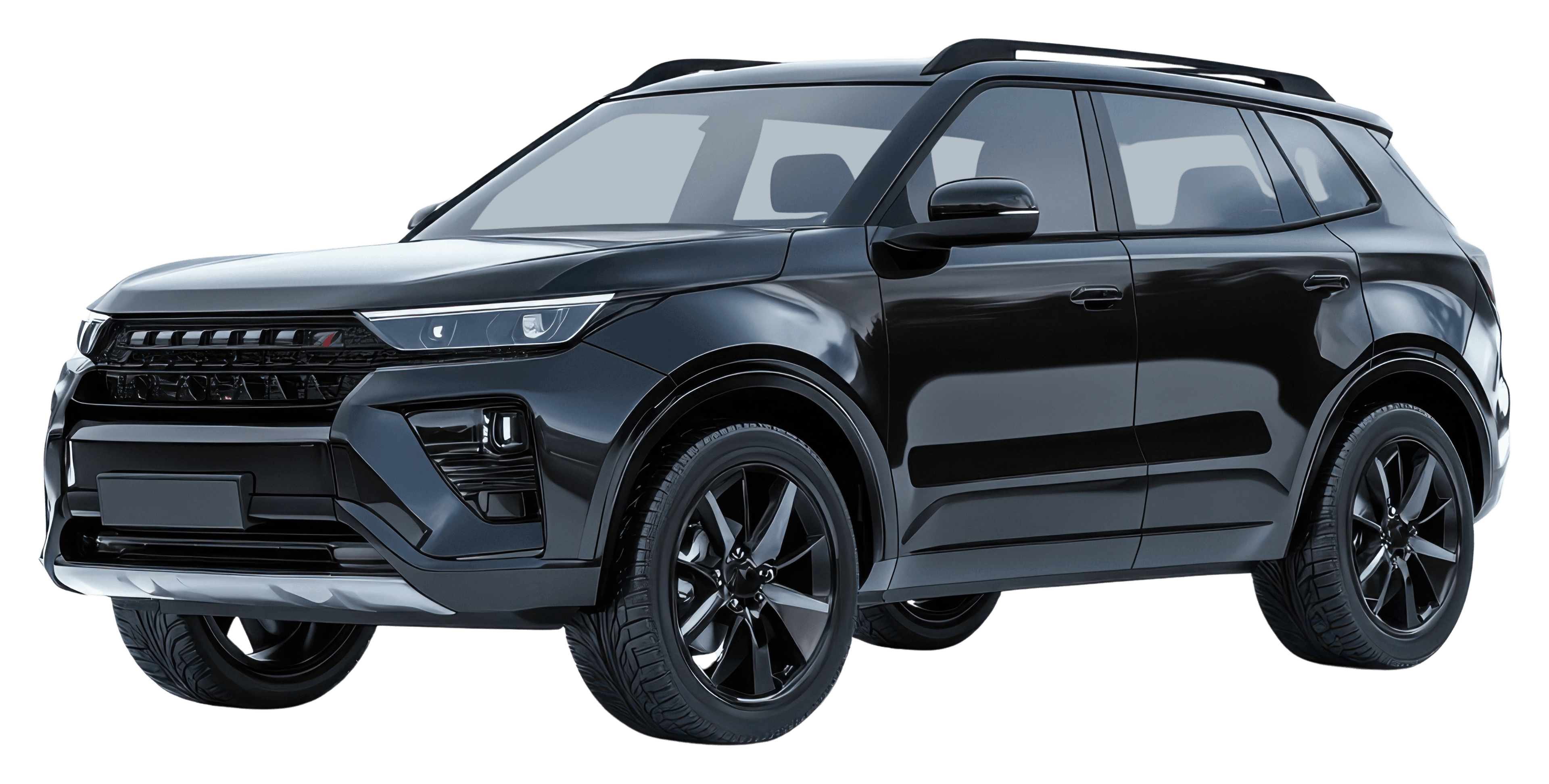
Choose a tint level
Our pick at 35% VLT
- 35%VLTIAQWEIAQWE 35% VLT Ceramic Car Window Tint Film 20 in x 20 ft Roll | High Heat Rejection, UV Block, Privacy, Shatterproof, Scratch Resistant & No Signal InterferenceCeramic (nano-ceramic, 5-layer)20″ × 20′ rollRated 35% VLT — meets the 35% requirement for front side windows.View on Amazon
Our pick at 50% VLT
- 50%VLTIAQWEIAQWE 50% VLT Ceramic Car Window Tint Film 20 in x 20 ft Roll | High Heat Rejection, UV Block, Privacy, Shatterproof, Scratch Resistant & No Signal InterferenceCeramic (nano-ceramic, 5-layer)20″ × 20′ rollRated 50% VLT — meets the 35% requirement for front side windows.View on Amazon
Our pick at 70% VLT
- 70%VLTARANAARANA 70% VLT 36"x15FT Ceramic Car Window Tint Film | Keep Car Cool, UV Heat Blocking, Daytime Privacy & Anti-Glare, Scratch Resistant, Phone/GPS Friendly, DIY InstallCeramic (nano-ceramic)36″ × 15′ rollRated 70% VLT — meets the 35% requirement for front side windows.View on Amazon
More options that clear this figure, darkest first
- 35%VLTIAQWEIAQWE 35% VLT Ceramic Car Window Tint Film 20 in x 20 ft Roll | High Heat Rejection, UV Block, Privacy, Shatterproof, Scratch Resistant & No Signal InterferenceCeramic (nano-ceramic, 5-layer)20″ × 20′ rollRated 35% VLT — meets the 35% requirement for front side windows.View on Amazon
- 35%VLTRockRoseRockRose 35% Nano Ceramic Car Window Tint 36 in x 25FT 2PLY Privacy Film Heat Block, 99% UVR, and 85% IRR Block for Auto or Home Strong Adhesive, Easy Shrink, Plotter Friendly - CharcoalCeramic (2-ply nano-ceramic)36″ × 25′ rollRated 35% VLT — meets the 35% requirement for front side windows.View on Amazon
- 50%VLTIAQWEIAQWE 50% VLT Ceramic Car Window Tint Film 20 in x 20 ft Roll | High Heat Rejection, UV Block, Privacy, Shatterproof, Scratch Resistant & No Signal InterferenceCeramic (nano-ceramic, 5-layer)20″ × 20′ rollRated 50% VLT — meets the 35% requirement for front side windows.View on Amazon
- 70%VLTARANAARANA 70% VLT 36"x15FT Ceramic Car Window Tint Film | Keep Car Cool, UV Heat Blocking, Daytime Privacy & Anti-Glare, Scratch Resistant, Phone/GPS Friendly, DIY InstallCeramic (nano-ceramic)36″ × 15′ rollRated 70% VLT — meets the 35% requirement for front side windows.View on Amazon
Showing 4 of the 12 films we list that clear this figure. Verify before you tint. We match a film’s own rating against the figure in the statute above. We do not measure film, and a manufacturer rating is not a compliance certificate.
The limits at a glance
Tennessee sets the same limits for passenger cars and for SUVs, vans and trucks, so there is nothing to switch between.
Film rated to meet the 35% requirement for front side windows
- 35% VLT minimum — measured on the film itselfTenn. Code Ann. § 55-9-107(a)(1)(A) — Tennessee Code Unannotated (Free Public Access), via LexisNexis Public Access · read · browser-retrieved
Every Tennessee tint rule we track
| Rule | Applies to | What the law says | Source |
|---|---|---|---|
| Windshield strip — how dark the strip may be | All vehicles | confirmed No VLT figure attaches to the windshield strip. The manufacturer's standard installed shade band is carved out of the 70 percent windshield rule entirely rather than held to a lower percentage.DetailNO_RESTRICTION rather than a gap: the exception is stated in the same sentence as the figure it excepts, so the text's own scope shows that no percentage was set for the band. What is NOT established, and is not claimed here, is whether an AFTERMARKET strip may be applied above the band — the statute excepts only the manufacturer's standard installed band, which on its face does not authorise adding one. | Tenn. Code Ann. § 55-9-107(a)(1)(B) — Tennessee Code Unannotated (Free Public Access), via LexisNexis Public Access · read · browser-retrieved “With the exception of the manufacturer's standard installed shade band, reduces the visible light transmittance in the windshield below seventy percent (70%).” |
| Windshield strip — how far down it may extend | All vehicles | manufacturer_shade_bandDetailTennessee expresses this as a MANUFACTURER'S MARKING, not as a measurement and not as the AS-1 line. There is no inches-from-the-top figure anywhere in § 55-9-107, so any source publishing one for Tennessee is not reading the statute. The band that is excepted is the one the manufacturer installed as standard — which means the permitted extent varies by vehicle and cannot be stated as a number. This is precisely the incompatibility that `windshield_strip_extent` exists to preserve rather than flatten. | Tenn. Code Ann. § 55-9-107(a)(1)(B) — Tennessee Code Unannotated (Free Public Access), via LexisNexis Public Access · read · browser-retrieved “With the exception of the manufacturer's standard installed shade band” |
| Windshield below the strip | All vehicles | 70% VLT minimum measured on the installed glass + film together DetailBASIS: `net_assembly`, and the contrast with the 35 percent row one subparagraph earlier is deliberate on the statute's part, not an artefact of this encoding. (a)(1)(A) regulates the transmittance OF THE MATERIAL; (a)(1)(B) regulates transmittance "in the windshield" — the glazing and anything applied to it, taken together. A film that is itself 70 percent will not keep a windshield at 70 percent once installed. | Tenn. Code Ann. § 55-9-107(a)(1)(B) — Tennessee Code Unannotated (Free Public Access), via LexisNexis Public Access · read · browser-retrieved “With the exception of the manufacturer's standard installed shade band, reduces the visible light transmittance in the windshield below seventy percent (70%).” |
| Front side windows | All vehicles | 35% VLT minimum measured on the film itself DetailBASIS: `film`. The 35 percent is a property of the applied material, not of the finished window. § 55-9-107(a)(1) opens by describing a window that already meets FMVSS 205 and then prohibits altering it with "any material that ... [h]as a visible light transmittance of less than thirty-five percent (35%)". A film measured on its own at 35 percent is what the statute names; the same film over factory glass reads lower on a meter, and the statute does not set that figure. Front door windows are the one place Tennessee allows no exemption at all — see (a)(6)(B). | Tenn. Code Ann. § 55-9-107(a)(1)(A) — Tennessee Code Unannotated (Free Public Access), via LexisNexis Public Access · read · browser-retrieved “Has a visible light transmittance of less than thirty-five percent (35%)” |
| Back side windows | All vehicles | 35% VLT minimum measured on the film itself DetailBASIS: `film`. The 35 percent is a property of the applied material, not of the finished window. § 55-9-107(a)(1) opens by describing a window that already meets FMVSS 205 and then prohibits altering it with "any material that ... [h]as a visible light transmittance of less than thirty-five percent (35%)". A film measured on its own at 35 percent is what the statute names; the same film over factory glass reads lower on a meter, and the statute does not set that figure. Tennessee draws NO line between front and rear side glass: (a)(1)(A) reaches "any window". Exempt classes under (a)(6)(A): vehicles federally permitted to carry non-conforming windows (those windows only); vehicles on commercial or government-service plates used for law enforcement, for windows rearward of the front doors; vehicles registered in another state that comply with the state of registration; and vehicles owned or leased by licensed private investigators. (a)(6)(B) shuts the door on reading any of that broadly: the subdivision "shall not be construed in any way to exempt the front door windows of any motor vehicle of any kind". | Tenn. Code Ann. § 55-9-107(a)(1)(A) — Tennessee Code Unannotated (Free Public Access), via LexisNexis Public Access · read · browser-retrieved “Has a visible light transmittance of less than thirty-five percent (35%)” |
| Rear window | All vehicles | 35% VLT minimum measured on the film itself DetailBASIS: `film`. The 35 percent is a property of the applied material, not of the finished window. § 55-9-107(a)(1) opens by describing a window that already meets FMVSS 205 and then prohibits altering it with "any material that ... [h]as a visible light transmittance of less than thirty-five percent (35%)". A film measured on its own at 35 percent is what the statute names; the same film over factory glass reads lower on a meter, and the statute does not set that figure. The rear window is governed by the same "any window" language as the sides — Tennessee grants no rear-glass concession to SUVs, vans or trucks, unlike most of its neighbours. Exempt classes under (a)(6)(A): vehicles federally permitted to carry non-conforming windows (those windows only); vehicles on commercial or government-service plates used for law enforcement, for windows rearward of the front doors; vehicles registered in another state that comply with the state of registration; and vehicles owned or leased by licensed private investigators. (a)(6)(B) shuts the door on reading any of that broadly: the subdivision "shall not be construed in any way to exempt the front door windows of any motor vehicle of any kind". | Tenn. Code Ann. § 55-9-107(a)(1)(A) — Tennessee Code Unannotated (Free Public Access), via LexisNexis Public Access · read · browser-retrieved “Has a visible light transmittance of less than thirty-five percent (35%)” |
| Reflectivity — front side windows | All vehicles | unclear No published figure Under review — the official source could not be retrieved. This is a gap in our research, and it says nothing about what Tennessee requires here; the state may set its rule in words rather than a percentage. Tenn. Code Ann. § 55-9-107 states no reflectance limit — no percentage, and no qualitative bar on mirrored or metallic film. The section was read in full and its operative prohibition in (a)(1) is a closed two-item list about light TRANSMITTANCE only. This is recorded as a gap rather than as a confirmed absence because only the tint section itself was read: a reflectance rule could sit elsewhere in Title 55 (or in the commissioner's field-comparison-test procedure under (e)), and that was not searched. Publishing "no reflectance limit" on the strength of one section would be the kind of confident negative this dataset does not make. | — |
| Reflectivity — back side windows | All vehicles | unclear No published figure Under review — the official source could not be retrieved. This is a gap in our research, and it says nothing about what Tennessee requires here; the state may set its rule in words rather than a percentage. See reflectivity_front — the same single-section reading governs, and the same caution applies. | — |
| Medical exemption | All vehicles | A person with a medical condition adversely affected by ultraviolet light may submit a physician's statement to the commissioner certifying that the condition requires light-transmission reduction beyond the statutory standards. The commissioner refers it to the department's medical review board, which evaluates it and, if warranted, recommends the exemption AND the appropriate degree of tinting. The commissioner then supplies a certificate or decal indicating the degree of exemption, which must be displayed in the vehicle.DetailTennessee's scheme is unusual in two respects worth surfacing to a reader. First, the exemption is not self-executing on a doctor's note: a departmental MEDICAL REVIEW BOARD evaluates the certificate and sets the degree of tint allowed, so the permitted figure is per-applicant and is not published in the Code. Second, § 55-9-107(b)(2) gives a refused applicant a real appeal — under the Uniform Administrative Procedures Act, to the chancery court of the county where the applicant resides, at the applicant's option. Tennessee names no qualifying conditions, unlike New Jersey's enumerated list. | Tenn. Code Ann. § 55-9-107(b)(1) — Tennessee Code Unannotated (Free Public Access), via LexisNexis Public Access · read · browser-retrieved “any person with a medical condition that is adversely affected by ultraviolet light may submit a statement to the commissioner from that person's physician certifying that the person has a medical condition that requires reduction of light transmission in the windows of the person's vehicle in excess of the standards established in subsection (a).” |
| Certification sticker / label | All vehicles | RequiredDetailThe label goes on the LOWER RIGHT CORNER OF THE DRIVER'S WINDOW — not the windshield, which is where most states put it — and must carry the installer's business name and the legend "Complies with Tennessee Code Annotated, § 55-9-107." The duty falls on a "professional installer", defined by (a)(2) as anyone who installs tinting in Tennessee "for profit, barter, or wages or commissions", so an owner who tints their own car has no label to affix. Separately, (a)(4) requires the installer to give the customer a signed receipt recording the installation date, the vehicle's make, model, paint colour and plate, and the legend "This receipt shall be kept with motor vehicle registration documents." That receipt matters because (a)(5) puts the BURDEN OF PROOF of compliance on the vehicle's owner. | Tenn. Code Ann. § 55-9-107(a)(3) — Tennessee Code Unannotated (Free Public Access), via LexisNexis Public Access · read · browser-retrieved “All professional installers of window tinting materials shall supply and shall affix to the lower right corner of the driver's window an adhesive label, the size and style of which shall be determined by the commissioner of safety” |
| Restricted colors | All vehicles | unclear No published figure Under review — the official source could not be retrieved. This is a gap in our research, and it says nothing about what Tennessee requires here; the state may set its rule in words rather than a percentage. No colour rule appears in § 55-9-107. The statute regulates transmittance and says nothing about the colour or hue of the material. Recorded as a gap on the same reasoning as reflectivity_front: the tint section is silent, and the rest of Title 55 was not searched. | — |
| Side mirrors required if the rear window is tinted | All vehicles | unclear No published figure Under review — the official source could not be retrieved. This is a gap in our research, and it says nothing about what Tennessee requires here; the state may set its rule in words rather than a percentage. No mirror condition appears in § 55-9-107, and Tennessee's structure gives it nothing to attach to — the state applies one figure to every window rather than trading darker rear glass against dual side mirrors, which is the arrangement that produces a mirror condition elsewhere. That is suggestive of absence rather than proof of it, since Tennessee's general mirror requirement was not located, so it is recorded as a gap. | — |
Film rated to meet the 35% requirement for the rear window
- 35% VLT minimum — measured on the film itselfTenn. Code Ann. § 55-9-107(a)(1)(A) — Tennessee Code Unannotated (Free Public Access), via LexisNexis Public Access · read · browser-retrieved
As an Amazon Associate, StreetLawful earns from qualifying purchases. Product listings are matched to statutory requirements as we read them — this is not a guarantee of compliance, and we do not test or measure any film ourselves.
Choose a tint level
Our pick at 35% VLT
- 35%VLTIAQWEIAQWE 35% VLT Ceramic Car Window Tint Film 20 in x 20 ft Roll | High Heat Rejection, UV Block, Privacy, Shatterproof, Scratch Resistant & No Signal InterferenceCeramic (nano-ceramic, 5-layer)20″ × 20′ rollRated 35% VLT — meets the 35% requirement for the rear window.View on Amazon
Our pick at 50% VLT
- 50%VLTIAQWEIAQWE 50% VLT Ceramic Car Window Tint Film 20 in x 20 ft Roll | High Heat Rejection, UV Block, Privacy, Shatterproof, Scratch Resistant & No Signal InterferenceCeramic (nano-ceramic, 5-layer)20″ × 20′ rollRated 50% VLT — meets the 35% requirement for the rear window.View on Amazon
Our pick at 70% VLT
- 70%VLTARANAARANA 70% VLT 36"x15FT Ceramic Car Window Tint Film | Keep Car Cool, UV Heat Blocking, Daytime Privacy & Anti-Glare, Scratch Resistant, Phone/GPS Friendly, DIY InstallCeramic (nano-ceramic)36″ × 15′ rollRated 70% VLT — meets the 35% requirement for the rear window.View on Amazon
More options that clear this figure, darkest first
- 35%VLTIAQWEIAQWE 35% VLT Ceramic Car Window Tint Film 20 in x 20 ft Roll | High Heat Rejection, UV Block, Privacy, Shatterproof, Scratch Resistant & No Signal InterferenceCeramic (nano-ceramic, 5-layer)20″ × 20′ rollRated 35% VLT — meets the 35% requirement for the rear window.View on Amazon
- 35%VLTRockRoseRockRose 35% Nano Ceramic Car Window Tint 36 in x 25FT 2PLY Privacy Film Heat Block, 99% UVR, and 85% IRR Block for Auto or Home Strong Adhesive, Easy Shrink, Plotter Friendly - CharcoalCeramic (2-ply nano-ceramic)36″ × 25′ rollRated 35% VLT — meets the 35% requirement for the rear window.View on Amazon
- 50%VLTIAQWEIAQWE 50% VLT Ceramic Car Window Tint Film 20 in x 20 ft Roll | High Heat Rejection, UV Block, Privacy, Shatterproof, Scratch Resistant & No Signal InterferenceCeramic (nano-ceramic, 5-layer)20″ × 20′ rollRated 50% VLT — meets the 35% requirement for the rear window.View on Amazon
- 70%VLTARANAARANA 70% VLT 36"x15FT Ceramic Car Window Tint Film | Keep Car Cool, UV Heat Blocking, Daytime Privacy & Anti-Glare, Scratch Resistant, Phone/GPS Friendly, DIY InstallCeramic (nano-ceramic)36″ × 15′ rollRated 70% VLT — meets the 35% requirement for the rear window.View on Amazon
Showing 4 of the 12 films we list that clear this figure. Verify before you tint. We match a film’s own rating against the figure in the statute above. We do not measure film, and a manufacturer rating is not a compliance certificate.
Sources
- Tenn. Code Ann. § 55-9-107 — Tennessee Code Unannotated (Free Public Access), via LexisNexis Public Access, read
Nearby states
Other Tennessee modification laws
Tennessee exhaust and muffler laws
Not published yet. We have not researched this category for Tennessee — which is a statement about us, not about whether Tennessee regulates it.
Tennessee lighting and underglow laws
Not published yet. We have not researched this category for Tennessee — which is a statement about us, not about whether Tennessee regulates it.
Tennessee lift kit and bumper height laws
Not published yet. We have not researched this category for Tennessee — which is a statement about us, not about whether Tennessee regulates it.
Tennessee wheel and tire laws
Not published yet. We have not researched this category for Tennessee — which is a statement about us, not about whether Tennessee regulates it.
Tennessee ECU tuning and emissions laws
Not published yet. We have not researched this category for Tennessee — which is a statement about us, not about whether Tennessee regulates it.
Tennessee intake laws
Not published yet. We have not researched this category for Tennessee — which is a statement about us, not about whether Tennessee regulates it.
Tennessee body and appearance laws
Not published yet. We have not researched this category for Tennessee — which is a statement about us, not about whether Tennessee regulates it.