Georgia Window Tint Law 2026
Georgia requires at least 28% on the front side windows, 15% on the back side windows and 15% on the rear window.
As an Amazon Associate, StreetLawful earns from qualifying purchases. Product listings are matched to statutory requirements as we read them — this is not a guarantee of compliance, and we do not test or measure any film ourselves.
Choose a tint level
Our pick at 35% VLT
- 35%VLTIAQWEIAQWE 35% VLT Ceramic Car Window Tint Film 20 in x 20 ft Roll | High Heat Rejection, UV Block, Privacy, Shatterproof, Scratch Resistant & No Signal InterferenceCeramic (nano-ceramic, 5-layer)20″ × 20′ rollRated 35% VLT — may comply with the 28% requirement for front side windows; verify the installed reading.View on Amazon
Our pick at 50% VLT
- 50%VLTIAQWEIAQWE 50% VLT Ceramic Car Window Tint Film 20 in x 20 ft Roll | High Heat Rejection, UV Block, Privacy, Shatterproof, Scratch Resistant & No Signal InterferenceCeramic (nano-ceramic, 5-layer)20″ × 20′ rollRated 50% VLT — may comply with the 28% requirement for front side windows; verify the installed reading.View on Amazon
Our pick at 70% VLT
- 70%VLTARANAARANA 70% VLT 36"x15FT Ceramic Car Window Tint Film | Keep Car Cool, UV Heat Blocking, Daytime Privacy & Anti-Glare, Scratch Resistant, Phone/GPS Friendly, DIY InstallCeramic (nano-ceramic)36″ × 15′ rollRated 70% VLT — may comply with the 28% requirement for front side windows; verify the installed reading.View on Amazon
More options that clear this figure, darkest first
- 35%VLTIAQWEIAQWE 35% VLT Ceramic Car Window Tint Film 20 in x 20 ft Roll | High Heat Rejection, UV Block, Privacy, Shatterproof, Scratch Resistant & No Signal InterferenceCeramic (nano-ceramic, 5-layer)20″ × 20′ rollRated 35% VLT — may comply with the 28% requirement for front side windows; verify the installed reading.View on Amazon
- 35%VLTRockRoseRockRose 35% Nano Ceramic Car Window Tint 36 in x 25FT 2PLY Privacy Film Heat Block, 99% UVR, and 85% IRR Block for Auto or Home Strong Adhesive, Easy Shrink, Plotter Friendly - CharcoalCeramic (2-ply nano-ceramic)36″ × 25′ rollRated 35% VLT — may comply with the 28% requirement for front side windows; verify the installed reading.View on Amazon
- 50%VLTIAQWEIAQWE 50% VLT Ceramic Car Window Tint Film 20 in x 20 ft Roll | High Heat Rejection, UV Block, Privacy, Shatterproof, Scratch Resistant & No Signal InterferenceCeramic (nano-ceramic, 5-layer)20″ × 20′ rollRated 50% VLT — may comply with the 28% requirement for front side windows; verify the installed reading.View on Amazon
- 70%VLTARANAARANA 70% VLT 36"x15FT Ceramic Car Window Tint Film | Keep Car Cool, UV Heat Blocking, Daytime Privacy & Anti-Glare, Scratch Resistant, Phone/GPS Friendly, DIY InstallCeramic (nano-ceramic)36″ × 15′ rollRated 70% VLT — may comply with the 28% requirement for front side windows; verify the installed reading.View on Amazon
Showing 4 of the 12 films we list that clear this figure. Verify before you tint. We match a film’s own rating against the figure in the statute above. We do not measure film, and a manufacturer rating is not a compliance certificate.
The limits at a glance
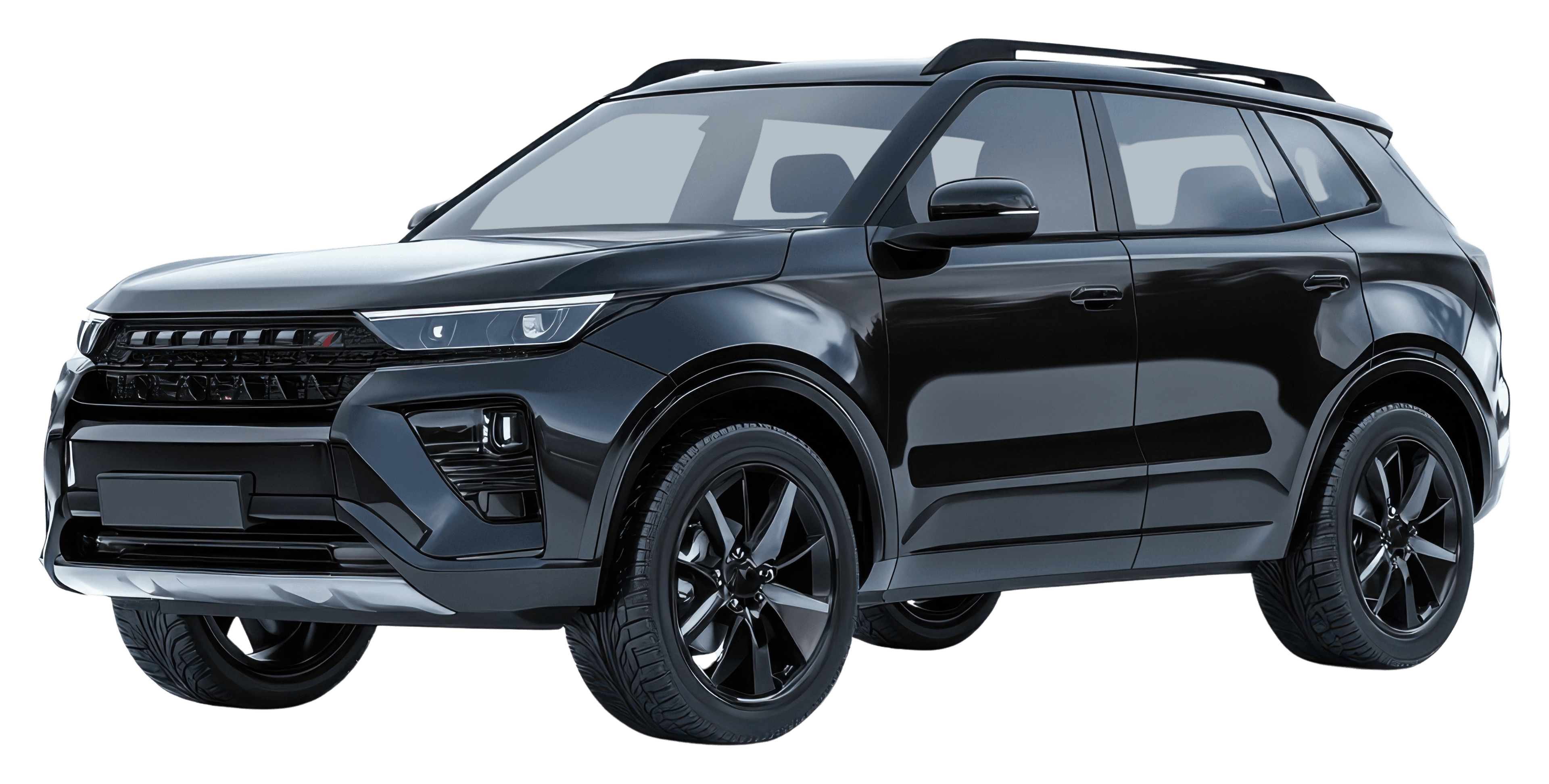
Georgia sets the same limits for passenger cars and for SUVs, vans and trucks, so there is nothing to switch between.
Film that may meet the 28% requirement for front side windows
- 28% VLT minimum — measured on the installed glass, film and window together statutory tolerance of plus or minus 3 percent appliesO.C.G.A. § 40-8-73.1(b)(2) — Official Code of Georgia Annotated, via LexisNexis Public Access · read · browser-retrieved
- This limit is measured on the installed glass, not on the film. Factory glass blocks light on its own, so film rated at or above the figure can still read below it once applied. Treat these as candidates and verify the installed reading.O.C.G.A. § 40-8-73.1(b)(2) — Official Code of Georgia Annotated, via LexisNexis Public Access · read · browser-retrieved
- This state also restricts film colour: One colour rule, and it applies to the windshield band: an item placed on the uppermost six inches of the windshield must not be red or amber in colour. No colour restriction is placed on side or rear glazing.O.C.G.A. § 40-8-73.1(c)(4) — Official Code of Georgia Annotated, via LexisNexis Public Access · read · browser-retrieved
- This state also caps reflectance for this glass at 20%. Mirrored and metallic films can exceed it regardless of their VLT rating.O.C.G.A. § 40-8-73.1(b)(2) — Official Code of Georgia Annotated, via LexisNexis Public Access · read · browser-retrieved
Every Georgia tint rule we track
| Rule | Applies to | What the law says | Source |
|---|---|---|---|
| Windshield strip — how dark the strip may be | All vehicles | confirmed No VLT figure attaches to the permitted six-inch band. What the exception requires of the item placed there is that it be transparent and not red or amber in colour, not that it meet a transmittance percentage.DetailNO_RESTRICTION rather than a gap: subsection (c) is a closed list of what subsection (b) does not reach, so an item satisfying (c)(4) is outside the prohibition altogether and there is no percentage left to meet. The constraint that does bite is qualitative and is recorded on restricted_colors. | O.C.G.A. § 40-8-73.1(c)(4) — Official Code of Georgia Annotated, via LexisNexis Public Access · read · browser-retrieved “Any transparent item which is not red or amber in color which is placed on the uppermost six inches of the windshield;” |
| Windshield strip — how far down it may extend | All vehicles | 6 inDetailGeorgia measures in INCHES FROM THE TOP and names no AS-1 line and no manufacturer marking. Read the exception precisely: it exempts a TRANSPARENT ITEM placed on the uppermost six inches, which is narrower than a general permission to tint that band — the item must be transparent, and it must not be red or amber. The 2026 amendment did not touch subsection (c)(4). | O.C.G.A. § 40-8-73.1(c)(4) — Official Code of Georgia Annotated, via LexisNexis Public Access · read · browser-retrieved “Any transparent item which is not red or amber in color which is placed on the uppermost six inches of the windshield;” |
| Windshield below the strip | All vehicles | No percentage, and nothing is permitted. Below the top six inches, it is unlawful to operate a vehicle whose front windshield carries material and glazing that reduce light transmission through the windshield at all — Georgia sets no threshold for the windshield, it sets zero.DetailNote what is absent: (b)(1) carries no percentage and no tolerance, unlike (b)(2) and (b)(3). Any reduction is a violation, subject only to the exceptions in subsection (c) — sun visors mounted forward of the side windows, the two corner squares for signs and stickers, common-carrier destination signs, legally required stickers and certificates, and the uppermost six inches. The 2026 amendment left this paragraph substantively alone; it only deleted a trailing "or". | O.C.G.A. § 40-8-73.1(b)(1) — Official Code of Georgia Annotated, via LexisNexis Public Access · read · browser-retrieved “Which has material and glazing applied or affixed to the front windshield, which material and glazing when so applied or affixed reduce light transmission through the windshield;” |
| Front side windows | All vehicles | 28% VLT minimum measured on the installed glass + film together statutory tolerance of plus or minus 3 percent applies DetailCHANGED 1 JULY 2026: this was 32 percent from 2005 until then. BASIS: `net_assembly`. Georgia regulates "material and glazing ... when so applied or affixed" as a single quantity, and § 40-8-73.1(a)(3) defines light transmission as the ratio of light "allowed to pass through a surface" — the finished surface, not the film. Nothing in the section states a figure for the material measured on its own. "Front side and door windows" is now a defined term — § 40-8-73.1(a)(1) fixes it as "the side and door windows of a motor vehicle that are directly to the right and left of the driver", which is what makes the new front/rear split administrable. | O.C.G.A. § 40-8-73.1(b)(2) — Official Code of Georgia Annotated, via LexisNexis Public Access · read · browser-retrieved “Which has material and glazing applied or affixed to the front side or door windows, which material and glazing when so applied or affixed reduce light transmission through the windshield or window to less than 28 percent, plus or minus 3 percent, or increase light reflectance to more than 20 percent” |
| Back side windows | All vehicles | 15% VLT minimum measured on the installed glass + film together statutory tolerance of plus or minus 3 percent applies DetailNEW ON 1 JULY 2026 — THIS PARAGRAPH DID NOT EXIST BEFORE. Until the 2026 amendment Georgia held every side window to a single figure; (b)(3) creates a separate and far more permissive class for glass behind the driver. § 40-8-73.1(a)(6) defines "rear side and door windows" as the side and door windows "that are not directly to the right and left of the driver". BASIS: `net_assembly`. Georgia regulates "material and glazing ... when so applied or affixed" as a single quantity, and § 40-8-73.1(a)(3) defines light transmission as the ratio of light "allowed to pass through a surface" — the finished surface, not the film. Nothing in the section states a figure for the material measured on its own. The rear-glass figure does not reach every vehicle: § 40-8-73.1(c)(6) lifts subsection (b) entirely from the rear windshield and rear side or door windows of multipurpose passenger vehicles, school buses and other public-transport buses, religious and nonprofit buses and vans, limousines owned or leased by a public or private entity, and any vehicle whose glass was tinted before factory delivery or as federal law permits. Note that the 2026 amendment narrowed this paragraph too, inserting "rear" and deleting the old words "except those windows to the right and left of the driver". | O.C.G.A. § 40-8-73.1(b)(3) — Official Code of Georgia Annotated, via LexisNexis Public Access · read · browser-retrieved “Which has material and glazing applied or affixed to the rear windshield or the rear side or door windows, which material and glazing when so applied or affixed reduce light transmission through the windshield or window to less than 15 percent, plus or minus 3 percent, or increase light reflectance to more than 20 percent.” |
| Rear window | All vehicles | 15% VLT minimum measured on the installed glass + film together statutory tolerance of plus or minus 3 percent applies DetailThe rear windshield sits in (b)(3) with the rear side glass at 15 percent. IT SITS THERE ALONE: an earlier reading of the bill redline placed it in (b)(2) as well, at 28 percent, and that was wrong — the Code Commission's amendment note records that the 2026 amendment "deleted 'the rear windshield or'" from (b)(2). BASIS: `net_assembly`. Georgia regulates "material and glazing ... when so applied or affixed" as a single quantity, and § 40-8-73.1(a)(3) defines light transmission as the ratio of light "allowed to pass through a surface" — the finished surface, not the film. Nothing in the section states a figure for the material measured on its own. The rear-glass figure does not reach every vehicle: § 40-8-73.1(c)(6) lifts subsection (b) entirely from the rear windshield and rear side or door windows of multipurpose passenger vehicles, school buses and other public-transport buses, religious and nonprofit buses and vans, limousines owned or leased by a public or private entity, and any vehicle whose glass was tinted before factory delivery or as federal law permits. Note that the 2026 amendment narrowed this paragraph too, inserting "rear" and deleting the old words "except those windows to the right and left of the driver". | O.C.G.A. § 40-8-73.1(b)(3) — Official Code of Georgia Annotated, via LexisNexis Public Access · read · browser-retrieved “Which has material and glazing applied or affixed to the rear windshield or the rear side or door windows, which material and glazing when so applied or affixed reduce light transmission through the windshield or window to less than 15 percent, plus or minus 3 percent, or increase light reflectance to more than 20 percent.” |
| Reflectivity — front side windows | All vehicles | 20% reflectance maximumDetailStated as a maximum: material that would "increase light reflectance to more than 20 percent" is unlawful. The 2026 amendment newly DEFINED the quantity — § 40-8-73.1(a)(2) now sets "light reflectance" as "the ratio of the amount of total light that is reflected outward by a product or material to the amount of total light falling on the product or material" — where the pre-2026 section used the term without defining it. Note the reflectance limit carries NO plus-or-minus tolerance, unlike the transmission figures in the same sentence. | O.C.G.A. § 40-8-73.1(b)(2) — Official Code of Georgia Annotated, via LexisNexis Public Access · read · browser-retrieved “Which has material and glazing applied or affixed to the front side or door windows, which material and glazing when so applied or affixed reduce light transmission through the windshield or window to less than 28 percent, plus or minus 3 percent, or increase light reflectance to more than 20 percent” |
| Reflectivity — back side windows | All vehicles | 20% reflectance maximumDetailGeorgia split the transmission figures front and rear in 2026 but kept reflectance uniform: the same 20 percent ceiling is written into both (b)(2) and (b)(3). The rear-glass figure does not reach every vehicle: § 40-8-73.1(c)(6) lifts subsection (b) entirely from the rear windshield and rear side or door windows of multipurpose passenger vehicles, school buses and other public-transport buses, religious and nonprofit buses and vans, limousines owned or leased by a public or private entity, and any vehicle whose glass was tinted before factory delivery or as federal law permits. Note that the 2026 amendment narrowed this paragraph too, inserting "rear" and deleting the old words "except those windows to the right and left of the driver". | O.C.G.A. § 40-8-73.1(b)(3) — Official Code of Georgia Annotated, via LexisNexis Public Access · read · browser-retrieved “Which has material and glazing applied or affixed to the rear windshield or the rear side or door windows, which material and glazing when so applied or affixed reduce light transmission through the windshield or window to less than 15 percent, plus or minus 3 percent, or increase light reflectance to more than 20 percent.” |
| Medical exemption | All vehicles | The Department of Public Safety may issue an exemption from the whole Code section to a person required for medical reasons to be shielded from the direct rays of the sun, for any vehicle that person owns or in which they are a habitual passenger. The application must be supported by written attestation from a Georgia-licensed physician or a certified optometrist, and the exemption issues with whatever conditions and limitations the Department prescribes.DetailTwo features a reader should not miss. The exemption is DISCRETIONARY — "may ... issue", not "shall" — and it comes with conditions "as may be prescribed by the Department of Public Safety", so the permitted darkness is not published in the Code and is set case by case. It also covers a habitual passenger's vehicle, not merely a vehicle the patient owns. The procedure is fleshed out in Ga. Comp. R. & Regs. r. 570-22-.06, which requires application to the Department of Public Safety Permit Section on a departmental form supported by written attestation stating the specific medical diagnosis; that rule states no permitted percentage and cross-refers to the statute, so no figure is recorded from it. | O.C.G.A. § 40-8-73.1(d) — Official Code of Georgia Annotated, via LexisNexis Public Access · read · browser-retrieved “The Department of Public Safety may, upon application from a person required for medical reasons to be shielded from the direct rays of the sun and only if such application is supported by written attestation of such fact from a person licensed to practice medicine under Chapter 34 of Title 43 or a person certified as an optometrist under Chapter 30 of Title 43, issue an exemption from the provisions of this Code section for any motor vehicle owned by such person or in which such person is a habitual passenger.” |
| Certification sticker / label | All vehicles | unclear No published figure Under review — the official sources we read state no figure for this. This is a gap in our research, and it says nothing about what Georgia requires here; the state may set its rule in words rather than a percentage. Georgia requires no compliance label on the vehicle, and this is recorded as a GAP rather than as a confirmed absence for a specific reason. O.C.G.A. § 40-8-73.1 was read in full and imposes no labelling duty — indeed (c)(5) exempts "Any federal, state, or local sticker or certificate which is required by law", which reads as though a tint label is not among them, and the Department of Public Safety's 2005 news release states that labels indicating compliance "are no longer required". But an installer duty does exist one layer down: Ga. Comp. R. & Regs. r. 570-22-.05(3) requires every person, firm or corporation installing material on vehicle glass to certify that transmission and reflectance after installation conform to § 40-8-73.1(b)(2). That rule was retrieved in a prior session from rules.sos.ga.gov and does not say a label must be affixed to the vehicle — but it was written against the pre-2026 text and still cross-refers to (b)(2) alone, which no longer covers rear glass. Whether the Department has conformed Chapter 570-22 to the amended statute was not determined, so nothing is asserted either way. | — |
| Restricted colors | All vehicles | One colour rule, and it applies to the windshield band: an item placed on the uppermost six inches of the windshield must not be red or amber in colour. No colour restriction is placed on side or rear glazing.DetailRed and amber are the colours reserved for signalling on a vehicle, which is why they are the two excluded — the rule is about not creating a false light forward, not about aesthetics. Recorded as a VERIFIED restriction that is narrow rather than as a general colour rule: nothing in § 40-8-73.1 constrains the colour of side or rear window film. | O.C.G.A. § 40-8-73.1(c)(4) — Official Code of Georgia Annotated, via LexisNexis Public Access · read · browser-retrieved “Any transparent item which is not red or amber in color which is placed on the uppermost six inches of the windshield;” |
| Side mirrors required if the rear window is tinted | All vehicles | unclear No published figure Under review — the official sources we read state no figure for this. This is a gap in our research, and it says nothing about what Georgia requires here; the state may set its rule in words rather than a percentage. No mirror condition appears in § 40-8-73.1, read in full, and none appears in Ga. Comp. R. & Regs. ch. 570-22, read in full in a prior session. Georgia's rear-glass permissions in (c)(6) are class-based — multipurpose passenger vehicles, school and public-transport buses, religious and nonprofit buses and vans, limousines, and factory-tinted glass — rather than conditioned on dual side mirrors, so the structure that generates a mirror requirement in other states is simply not how Georgia built its exemptions. That is strong evidence of absence but not proof: Georgia's general mirror requirement lives elsewhere in Title 40 Chapter 8 and was not read, so this is recorded as a gap rather than as NO_RESTRICTION. | — |
Film that may meet the 15% requirement for the rear window
- 15% VLT minimum — measured on the installed glass, film and window together statutory tolerance of plus or minus 3 percent appliesO.C.G.A. § 40-8-73.1(b)(3) — Official Code of Georgia Annotated, via LexisNexis Public Access · read · browser-retrieved
- This limit is measured on the installed glass, not on the film. Factory glass blocks light on its own, so film rated at or above the figure can still read below it once applied. Treat these as candidates and verify the installed reading.O.C.G.A. § 40-8-73.1(b)(3) — Official Code of Georgia Annotated, via LexisNexis Public Access · read · browser-retrieved
- This state also restricts film colour: One colour rule, and it applies to the windshield band: an item placed on the uppermost six inches of the windshield must not be red or amber in colour. No colour restriction is placed on side or rear glazing.O.C.G.A. § 40-8-73.1(c)(4) — Official Code of Georgia Annotated, via LexisNexis Public Access · read · browser-retrieved
- This state also caps reflectance for this glass at 20%. Mirrored and metallic films can exceed it regardless of their VLT rating.O.C.G.A. § 40-8-73.1(b)(3) — Official Code of Georgia Annotated, via LexisNexis Public Access · read · browser-retrieved
As an Amazon Associate, StreetLawful earns from qualifying purchases. Product listings are matched to statutory requirements as we read them — this is not a guarantee of compliance, and we do not test or measure any film ourselves.
Choose a tint level
Our pick at 15% VLT
- 15%VLTIAQWEIAQWE 15% VLT Ceramic Car Window Tint Film 20 in x 20 ft Roll | High Heat Rejection, UV Block, Privacy, Shatterproof, Scratch Resistant & No Signal InterferenceCeramic (nano-ceramic, 5-layer)20″ × 20′ rollRated 15% VLT — may comply with the 15% requirement for the rear window; verify the installed reading.View on Amazon
Our pick at 20% VLT
- 20%VLTIAQWEIAQWE 20% VLT Ceramic Car Window Tint Film 20 in x 20 ft Roll | High Heat Rejection, UV Block, Privacy, Shatterproof, Scratch Resistant & No Signal InterferenceCeramic (nano-ceramic, 5-layer)20″ × 20′ rollRated 20% VLT — may comply with the 15% requirement for the rear window; verify the installed reading.View on Amazon
Our pick at 35% VLT
- 35%VLTIAQWEIAQWE 35% VLT Ceramic Car Window Tint Film 20 in x 20 ft Roll | High Heat Rejection, UV Block, Privacy, Shatterproof, Scratch Resistant & No Signal InterferenceCeramic (nano-ceramic, 5-layer)20″ × 20′ rollRated 35% VLT — may comply with the 15% requirement for the rear window; verify the installed reading.View on Amazon
Our pick at 50% VLT
- 50%VLTIAQWEIAQWE 50% VLT Ceramic Car Window Tint Film 20 in x 20 ft Roll | High Heat Rejection, UV Block, Privacy, Shatterproof, Scratch Resistant & No Signal InterferenceCeramic (nano-ceramic, 5-layer)20″ × 20′ rollRated 50% VLT — may comply with the 15% requirement for the rear window; verify the installed reading.View on Amazon
Our pick at 70% VLT
- 70%VLTARANAARANA 70% VLT 36"x15FT Ceramic Car Window Tint Film | Keep Car Cool, UV Heat Blocking, Daytime Privacy & Anti-Glare, Scratch Resistant, Phone/GPS Friendly, DIY InstallCeramic (nano-ceramic)36″ × 15′ rollRated 70% VLT — may comply with the 15% requirement for the rear window; verify the installed reading.View on Amazon
More options that clear this figure, darkest first
- 15%VLTIAQWEIAQWE 15% VLT Ceramic Car Window Tint Film 20 in x 20 ft Roll | High Heat Rejection, UV Block, Privacy, Shatterproof, Scratch Resistant & No Signal InterferenceCeramic (nano-ceramic, 5-layer)20″ × 20′ rollRated 15% VLT — may comply with the 15% requirement for the rear window; verify the installed reading.View on Amazon
- 20%VLTIAQWEIAQWE 20% VLT Ceramic Car Window Tint Film 20 in x 20 ft Roll | High Heat Rejection, UV Block, Privacy, Shatterproof, Scratch Resistant & No Signal InterferenceCeramic (nano-ceramic, 5-layer)20″ × 20′ rollRated 20% VLT — may comply with the 15% requirement for the rear window; verify the installed reading.View on Amazon
- 35%VLTIAQWEIAQWE 35% VLT Ceramic Car Window Tint Film 20 in x 20 ft Roll | High Heat Rejection, UV Block, Privacy, Shatterproof, Scratch Resistant & No Signal InterferenceCeramic (nano-ceramic, 5-layer)20″ × 20′ rollRated 35% VLT — may comply with the 15% requirement for the rear window; verify the installed reading.View on Amazon
- 50%VLTIAQWEIAQWE 50% VLT Ceramic Car Window Tint Film 20 in x 20 ft Roll | High Heat Rejection, UV Block, Privacy, Shatterproof, Scratch Resistant & No Signal InterferenceCeramic (nano-ceramic, 5-layer)20″ × 20′ rollRated 50% VLT — may comply with the 15% requirement for the rear window; verify the installed reading.View on Amazon
Showing 4 of the 20 films we list that clear this figure. Verify before you tint. We match a film’s own rating against the figure in the statute above. We do not measure film, and a manufacturer rating is not a compliance certificate.
Sources
- O.C.G.A. § 40-8-73.1 (as amended by Ga. L. 2026, p. 917, § 3/HB 1161, effective July 1, 2026) — Official Code of Georgia Annotated, via LexisNexis Public Access, read
Nearby states
Other Georgia modification laws
Georgia exhaust and muffler laws
Not published yet. We have not researched this category for Georgia — which is a statement about us, not about whether Georgia regulates it.
Georgia lighting and underglow laws
Not published yet. We have not researched this category for Georgia — which is a statement about us, not about whether Georgia regulates it.
Georgia lift kit and bumper height laws
Not published yet. We have not researched this category for Georgia — which is a statement about us, not about whether Georgia regulates it.
Georgia wheel and tire laws
Not published yet. We have not researched this category for Georgia — which is a statement about us, not about whether Georgia regulates it.
Georgia ECU tuning and emissions laws
Not published yet. We have not researched this category for Georgia — which is a statement about us, not about whether Georgia regulates it.
Georgia intake laws
Not published yet. We have not researched this category for Georgia — which is a statement about us, not about whether Georgia regulates it.
Georgia body and appearance laws
Not published yet. We have not researched this category for Georgia — which is a statement about us, not about whether Georgia regulates it.