District of Columbia Window Tint Law 2026
District of Columbia requires at least 70% on the front side windows, 50% on the back side windows and 50% on the rear window.
As an Amazon Associate, StreetLawful earns from qualifying purchases. Product listings are matched to statutory requirements as we read them — this is not a guarantee of compliance, and we do not test or measure any film ourselves.
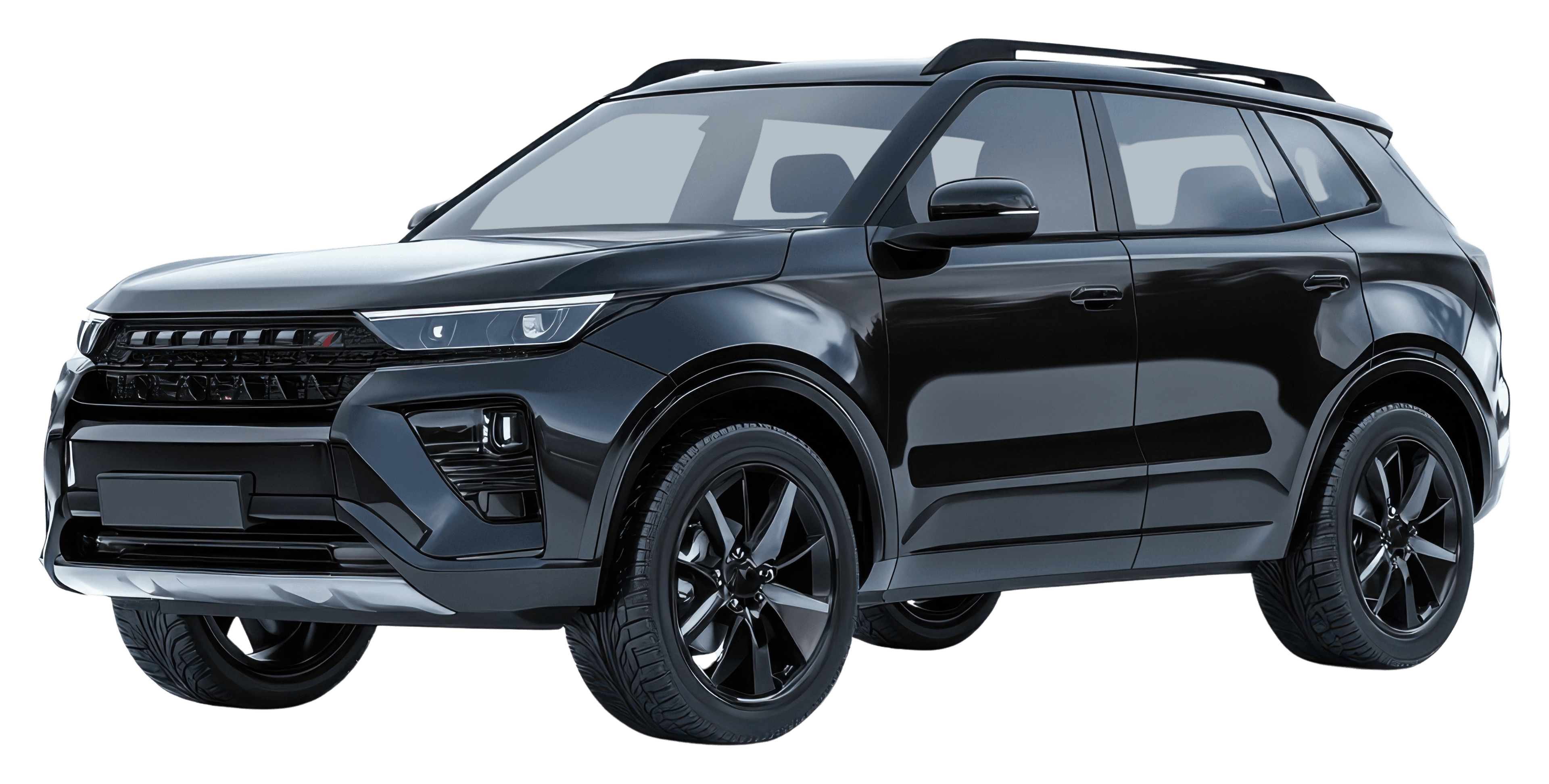
Choose a tint level
Our pick at 70% VLT
- 70%VLTARANAARANA 70% VLT 36"x15FT Ceramic Car Window Tint Film | Keep Car Cool, UV Heat Blocking, Daytime Privacy & Anti-Glare, Scratch Resistant, Phone/GPS Friendly, DIY InstallCeramic (nano-ceramic)36″ × 15′ rollRated 70% VLT — may comply with the 70% requirement for front side windows; verify the installed reading.View on Amazon
More options that clear this figure, darkest first
- 70%VLTARANAARANA 70% VLT 36"x15FT Ceramic Car Window Tint Film | Keep Car Cool, UV Heat Blocking, Daytime Privacy & Anti-Glare, Scratch Resistant, Phone/GPS Friendly, DIY InstallCeramic (nano-ceramic)36″ × 15′ rollRated 70% VLT — may comply with the 70% requirement for front side windows; verify the installed reading.View on Amazon
- 70%VLTMotoShield ProMotoShield Pro 70% VLT Nano Ceramic Window Tint for Car 40" in x 6' ft 2PLY Roll High Heat Rejection & Glare Reduction Auto Tint Privacy Film, Rejects up to 99% IRR, 99% UV Blocking, Easy DIY ShrinkCeramic (2-ply nano-ceramic PET)40″ × 6′ rollRated 70% VLT — may comply with the 70% requirement for front side windows; verify the installed reading.View on Amazon
- 70%VLTTOYOCOTOYOCO Ceramic Car Window Tint Film, 70% VLT, 20" x 10FT Window Privacy Film, No Signal Interference, 99% UV Protection & Scratch-Resistant for Side & Rear Windows, DIY InstallCeramic (2-ply)20″ × 10′ rollRated 70% VLT — may comply with the 70% requirement for front side windows; verify the installed reading.View on Amazon
- 70%VLTVepagooVepagoo Ceramic Car Window Tint Film 70% VLT, 36" x15FT | Daytime privacy, no signal interference, 99% UV block, scratch-resistant, DIY side/rear windows.Ceramic (nano-ceramic)36″ × 15′ rollRated 70% VLT — may comply with the 70% requirement for front side windows; verify the installed reading.View on Amazon
All 4 films we list that clear this figure. Verify before you tint. We match a film’s own rating against the figure in the statute above. We do not measure film, and a manufacturer rating is not a compliance certificate.
The limits at a glance
District of Columbia sets the same limits for passenger cars and for SUVs, vans and trucks, so there is nothing to switch between.
Film that may meet the 70% requirement for front side windows
- 70% VLT minimum — measured on the installed glass, film and window togetherD.C. Code §50-2207.02(a)(1)(A) — Code of the District of Columbia (D.C. Law Library) · read
- This limit is measured on the installed glass, not on the film. Factory glass blocks light on its own, so film rated at or above the figure can still read below it once applied. Treat these as candidates and verify the installed reading.D.C. Code §50-2207.02(a)(1)(A) — Code of the District of Columbia (D.C. Law Library) · read
Every District of Columbia tint rule we track
| Rule | Applies to | What the law says | Source |
|---|---|---|---|
| Windshield strip — how dark the strip may be | All vehicles | confirmed No transmittance floor for the permitted windshield band. (b) simply lifts the 70% duty above the AS-1 line or within 5 inches of the top and substitutes no other figure.DetailRecorded as an affirmatively-stated absence rather than an unread gap: (b) is a permission drafted as a carve-out from (a), and no percentage attaches to what it permits. The section states no colour or reflectance constraint on that band either, so the District is unusually permissive about the strip while unusually strict about everything below it. | D.C. Code §50-2207.02(b) — Code of the District of Columbia (D.C. Law Library) · read “with a front windshield that allows less than 70% light transmittance above the AS-1 line, or within 5 inches from the top of the windshield.” |
| Windshield strip — how far down it may extend | All vehicles | AS-1 line OR 5 inches from the top — stated in the alternative, not as competing ceilingsDetailThe disjunction matters. Oklahoma (47 O.S. §12-422(D)(11)(a)) and Wyoming (W.S. §31-5-962(c)) recite the same two measures and then add "whichever is closer to the top of the windshield", taking the more restrictive. The District writes plain "or", which on its face offers the alternative rather than the minimum — so a windshield band reaching five inches down is within (b) even where the AS-1 line sits higher. | D.C. Code §50-2207.02(b) — Code of the District of Columbia (D.C. Law Library) · read “A motor vehicle may be operated or parked upon the public streets of the District of Columbia with a front windshield that allows less than 70% light transmittance above the AS-1 line, or within 5 inches from the top of the windshield.” |
| Windshield below the strip | All vehicles | 70% VLT minimum measured on the installed glass + film together DetailThe District regulates the windshield by the same figure as the front side windows, in the same clause. NET_ASSEMBLY basis: the object that must "allow" the percentage is the windshield or window itself — "A front windshield or front side windows that allow less than 70% light transmittance". The District never rates film in isolation. (h)(4) then removes factory-tinted vehicles from the section altogether, so in practice the figures govern the finished window on a vehicle carrying aftermarket film. Read with (h)(4), which exempts "Vehicles with tinted windows installed by the manufacturer prior to purchase". A vehicle whose glazing was tinted at the factory is outside the section, so the percentage does not condemn OEM privacy glass that measures below it. | D.C. Code §50-2207.02(a)(1)(A) — Code of the District of Columbia (D.C. Law Library) · read “A front windshield or front side windows that allow less than 70% light transmittance; or” |
| Front side windows | All vehicles | 70% VLT minimum measured on the installed glass + film together DetailApplies to every motor vehicle "other than a mini-van" — see the paired minivan row. NET_ASSEMBLY basis: the object that must "allow" the percentage is the windshield or window itself — "A front windshield or front side windows that allow less than 70% light transmittance". The District never rates film in isolation. (h)(4) then removes factory-tinted vehicles from the section altogether, so in practice the figures govern the finished window on a vehicle carrying aftermarket film. Read with (h)(4), which exempts "Vehicles with tinted windows installed by the manufacturer prior to purchase". A vehicle whose glazing was tinted at the factory is outside the section, so the percentage does not condemn OEM privacy glass that measures below it. | D.C. Code §50-2207.02(a)(1)(A) — Code of the District of Columbia (D.C. Law Library) · read “A front windshield or front side windows that allow less than 70% light transmittance; or” |
| Mini-van (as the statute names it) | 55% VLT minimum measured on the installed glass + film together DetailThe class is "mini-van" and the section defines it nowhere. It is not the federal "multipurpose passenger vehicle" category that Montana, South Carolina and Wyoming use, and it is not a general SUV/van/truck class — (a)(1) reaches "no motor vehicle, other than a mini-van". A District SUV is therefore held to 70%, not 55%. | D.C. Code §50-2207.02(a)(2)(A) — Code of the District of Columbia (D.C. Law Library) · read “A front windshield or front side windows that allow less than 55% light transmittance, or” | |
| Back side windows | All vehicles | 50% VLT minimum measured on the installed glass + film together DetailA 50% floor behind the driver is among the strictest in the dataset — most states step down sharply there, and several remove the limit altogether. NET_ASSEMBLY basis: the object that must "allow" the percentage is the windshield or window itself — "A front windshield or front side windows that allow less than 70% light transmittance". The District never rates film in isolation. (h)(4) then removes factory-tinted vehicles from the section altogether, so in practice the figures govern the finished window on a vehicle carrying aftermarket film. Read with (h)(4), which exempts "Vehicles with tinted windows installed by the manufacturer prior to purchase". A vehicle whose glazing was tinted at the factory is outside the section, so the percentage does not condemn OEM privacy glass that measures below it. | D.C. Code §50-2207.02(a)(1)(B) — Code of the District of Columbia (D.C. Law Library) · read “A rear windshield or rear side windows that allow less than 50% light transmittance.” |
| Mini-van (as the statute names it) | 35% VLT minimum measured on the installed glass + film together DetailThe mini-van concession is 15 points on the rear glass and 15 on the front — the same spread at both ends. | D.C. Code §50-2207.02(a)(2)(B) — Code of the District of Columbia (D.C. Law Library) · read “A rear windshield or rear side windows that allow less than 35% light transmittance.” | |
| Rear window | All vehicles | 50% VLT minimum measured on the installed glass + film together DetailThe rear windshield shares the clause and the figure with the rear side windows. The District attaches NO mirror condition to tinting it, unlike South Carolina and Wyoming — but it also permits far less darkness, so the trade those states make (dark rear glass in exchange for dual mirrors) never arises here. NET_ASSEMBLY basis: the object that must "allow" the percentage is the windshield or window itself — "A front windshield or front side windows that allow less than 70% light transmittance". The District never rates film in isolation. (h)(4) then removes factory-tinted vehicles from the section altogether, so in practice the figures govern the finished window on a vehicle carrying aftermarket film. | D.C. Code §50-2207.02(a)(1)(B) — Code of the District of Columbia (D.C. Law Library) · read “A rear windshield or rear side windows that allow less than 50% light transmittance.” |
| Mini-van (as the statute names it) | 35% VLT minimum measured on the installed glass + film together DetailEven the permissive class is held to 35% on the rear windshield, which many states leave unregulated entirely. | D.C. Code §50-2207.02(a)(2)(B) — Code of the District of Columbia (D.C. Law Library) · read “A rear windshield or rear side windows that allow less than 35% light transmittance.” | |
| Limousine | confirmed The section does not apply to limousines, ambulances, buses or hearses meeting the requirements of 18 DCMR §413.10.DetailThe exemption is conditional — it runs only to vehicles "meeting the requirements of 18 DCMR § 413.10", a regulation not retrieved for this extraction, so what those requirements are is not asserted here. (h) also exempts church-owned vehicles, all official government vehicles, and factory-tinted vehicles. | D.C. Code §50-2207.02(h)(1) — Code of the District of Columbia (D.C. Law Library) · read “Limousines, ambulances, buses, and hearses meeting the requirements of 18 DCMR § 413.10;” | |
| Bus | confirmed The section does not apply to buses meeting the requirements of 18 DCMR §413.10.DetailConditional on 18 DCMR §413.10, which was not retrieved. | D.C. Code §50-2207.02(h)(1) — Code of the District of Columbia (D.C. Law Library) · read “Limousines, ambulances, buses, and hearses meeting the requirements of 18 DCMR § 413.10;” | |
| Reflectivity — front side windows | All vehicles | unclear No published figure Under review — the official sources we read state no figure for this. This is a gap in our research, and it says nothing about what District of Columbia requires here; the state may set its rule in words rather than a percentage. Not addressed in D.C. Code §50-2207.02. The section is drafted entirely in terms of light transmittance and never mentions reflectance, luminous reflectance, metallic or mirrored finishes. This is a substantive silence rather than an unread one — the whole operative provision, (a) through (b), is quoted above. (j) authorizes the DMV Director to "amend existing provisions of Title 18 of the District of Columbia Municipal Regulations to conform to its requirements", so 18 DCMR is where any reflectance rule would live; it was not retrieved and no reflectance limit is asserted either way. | — |
| Reflectivity — back side windows | All vehicles | unclear No published figure Under review — the official sources we read state no figure for this. This is a gap in our research, and it says nothing about what District of Columbia requires here; the state may set its rule in words rather than a percentage. Not addressed in D.C. Code §50-2207.02, for the same reason as reflectivity_front — the section contains no reflectance concept at all. Any such rule would sit in Title 18 DCMR under the (j) rulemaking authority, which was not retrieved. | — |
| Medical exemption | All vehicles | Available by DMV exemption. The section does not apply to vehicles exempted by the Director of the Department of Motor Vehicles because the owner has a medical condition requiring windows that admit less light than subsection (a) permits.DetailA discretionary agency exemption, not a carry-the-affidavit regime and not a fixed alternative percentage — the District states no floor for an exempted vehicle, unlike Wyoming (25%). Note the exemption runs to the OWNER's medical condition; the text does not extend it to a habitual passenger, as Oklahoma's does. The section prescribes no application procedure; (j) authorizes the Director to promulgate implementing rules in Title 18 DCMR, subject to a 45-day Council review period. | D.C. Code §50-2207.02(h)(5) — Code of the District of Columbia (D.C. Law Library) · read “Vehicles exempted by the Director of the Department of Motor Vehicles because the owner of the vehicle has a medical condition requiring windows which allows less light than permitted pursuant to subsection (a) of this section.” |
| Certification sticker / label | All vehicles | unclear No published figure Under review — the official sources we read state no figure for this. This is a gap in our research, and it says nothing about what District of Columbia requires here; the state may set its rule in words rather than a percentage. Not addressed in D.C. Code §50-2207.02. No sticker, label, certificate or installer disclosure is required. The District's compliance mechanism is inspection-based instead: (d) and (e) require a vehicle found in violation to be inspected at an official District Inspection Station within 5 business days, with fines up to $1,000 for a first failure to comply and up to $5,000 on a second or subsequent occasion, and (o) directs that "The Director shall reject any vehicles appearing for inspection pursuant to Chapter 11 of this title whose window tint violates subsections (a) or (b) of this section." (g) separately makes it unlawful to install non-compliant tint in the District. | — |
| Restricted colors | All vehicles | unclear No published figure Under review — the official sources we read state no figure for this. This is a gap in our research, and it says nothing about what District of Columbia requires here; the state may set its rule in words rather than a percentage. Not addressed in D.C. Code §50-2207.02. The section names no prohibited colour anywhere, including for the windshield band permitted by (b) — a notable contrast with the red/amber and red/yellow/amber bars that Colorado, Oklahoma, Wyoming, Montana and South Carolina all attach to their equivalent allowances. Title 18 DCMR was not retrieved. | — |
| Side mirrors required if the rear window is tinted | All vehicles | unclear No published figure Under review — the official sources we read state no figure for this. This is a gap in our research, and it says nothing about what District of Columbia requires here; the state may set its rule in words rather than a percentage. Not addressed in D.C. Code §50-2207.02. No mirror requirement is stated or implied, and none is needed on the face of the scheme: the District holds the rear windshield to 50% (35% for a mini-van), so it never permits the near-opaque rear glass that leads South Carolina, Wyoming and West Virginia to require dual outside mirrors as a condition. | — |
Film that may meet the 50% requirement for the rear window
- 50% VLT minimum — measured on the installed glass, film and window togetherD.C. Code §50-2207.02(a)(1)(B) — Code of the District of Columbia (D.C. Law Library) · read
- This limit is measured on the installed glass, not on the film. Factory glass blocks light on its own, so film rated at or above the figure can still read below it once applied. Treat these as candidates and verify the installed reading.D.C. Code §50-2207.02(a)(1)(B) — Code of the District of Columbia (D.C. Law Library) · read
As an Amazon Associate, StreetLawful earns from qualifying purchases. Product listings are matched to statutory requirements as we read them — this is not a guarantee of compliance, and we do not test or measure any film ourselves.
Choose a tint level
Our pick at 50% VLT
- 50%VLTIAQWEIAQWE 50% VLT Ceramic Car Window Tint Film 20 in x 20 ft Roll | High Heat Rejection, UV Block, Privacy, Shatterproof, Scratch Resistant & No Signal InterferenceCeramic (nano-ceramic, 5-layer)20″ × 20′ rollRated 50% VLT — may comply with the 50% requirement for the rear window; verify the installed reading.View on Amazon
Our pick at 70% VLT
- 70%VLTARANAARANA 70% VLT 36"x15FT Ceramic Car Window Tint Film | Keep Car Cool, UV Heat Blocking, Daytime Privacy & Anti-Glare, Scratch Resistant, Phone/GPS Friendly, DIY InstallCeramic (nano-ceramic)36″ × 15′ rollRated 70% VLT — may comply with the 50% requirement for the rear window; verify the installed reading.View on Amazon
More options that clear this figure, darkest first
- 50%VLTIAQWEIAQWE 50% VLT Ceramic Car Window Tint Film 20 in x 20 ft Roll | High Heat Rejection, UV Block, Privacy, Shatterproof, Scratch Resistant & No Signal InterferenceCeramic (nano-ceramic, 5-layer)20″ × 20′ rollRated 50% VLT — may comply with the 50% requirement for the rear window; verify the installed reading.View on Amazon
- 50%VLTRockRoseRockRose 50% Premium Carbon Car Window Tint Film 40 in x 100FT 2PLY Charcoal Privacy Film UV, Heat Blocking Tint for Car or Home Adhesive Film Easy Shrink, Plotter Friendly Pro GradeCarbon (2-ply PET)40″ × 100′ rollRated 50% VLT — may comply with the 50% requirement for the rear window; verify the installed reading.View on Amazon
- 50%VLTTOYOCOTOYOCO Ceramic Car Window Tint Film, 50% VLT, 36" x 25FT Window Privacy Film, No Signal Interference, 99% UV Protection & Scratch-Resistant for Side & Rear Windows, DIY InstallCeramic (2-ply)36″ × 25′ rollRated 50% VLT — may comply with the 50% requirement for the rear window; verify the installed reading.View on Amazon
- 70%VLTARANAARANA 70% VLT 36"x15FT Ceramic Car Window Tint Film | Keep Car Cool, UV Heat Blocking, Daytime Privacy & Anti-Glare, Scratch Resistant, Phone/GPS Friendly, DIY InstallCeramic (nano-ceramic)36″ × 15′ rollRated 70% VLT — may comply with the 50% requirement for the rear window; verify the installed reading.View on Amazon
Showing 4 of the 8 films we list that clear this figure. Verify before you tint. We match a film’s own rating against the figure in the statute above. We do not measure film, and a manufacturer rating is not a compliance certificate.
Sources
- D.C. Code §50-2207.02 — Code of the District of Columbia (D.C. Law Library), read
Nearby states
Other District of Columbia modification laws
District of Columbia exhaust and muffler laws
Not published yet. We have not researched this category for District of Columbia — which is a statement about us, not about whether District of Columbia regulates it.
District of Columbia lighting and underglow laws
Not published yet. We have not researched this category for District of Columbia — which is a statement about us, not about whether District of Columbia regulates it.
District of Columbia lift kit and bumper height laws
Not published yet. We have not researched this category for District of Columbia — which is a statement about us, not about whether District of Columbia regulates it.
District of Columbia wheel and tire laws
Not published yet. We have not researched this category for District of Columbia — which is a statement about us, not about whether District of Columbia regulates it.
District of Columbia ECU tuning and emissions laws
Not published yet. We have not researched this category for District of Columbia — which is a statement about us, not about whether District of Columbia regulates it.
District of Columbia intake laws
Not published yet. We have not researched this category for District of Columbia — which is a statement about us, not about whether District of Columbia regulates it.
District of Columbia body and appearance laws
Not published yet. We have not researched this category for District of Columbia — which is a statement about us, not about whether District of Columbia regulates it.